
What Routine Maintenance Does a Hot Foil Stamping Machine Require
You’ve seen it happen. Monday morning, the first shift arrives, powers up the machine, and... nothing. The heating plate won’t reach temperature. The foil feeds erratically. The stamping is uneven, half the sheet missing foil entirely. The maintenance log is blank. No one remembered to clean the die last Friday. The air filter is clogged. The guide rails are dry.
Most unplanned downtime on a hot foil stamping machine is preventable. In fact, skipped maintenance is the #1 cause of unexpected failures in foil stamping operations. The good news is that a structured maintenance routine — daily, weekly, monthly, and beyond — doesn’t take hours. It takes a few minutes per shift and a little discipline. This guide breaks down exactly what you need to do, at each frequency, to keep your machine running smooth and your stamping quality consistent. No guesswork, no fluff — just a practical checklist your operators can follow.
Start‑of‑shift – what to check before you power up
These ten minutes catch most developing problems before they become failures.
Look at the heating plate first
Before turning on the power, inspect the heating plate surface. Any visible residue, foil scum, or adhesive buildup? Dark spots or uneven discoloration mean degraded polymer stuck to the plate. Deep scratches are worse — they’ll transfer marks onto every sheet you stamp.
Clean with brass, not steel
For light residue, use a brass brush or a non‑abrasive cloth. Brass is softer than the plate’s hardened steel, so it won’t scratch. Steel wool is forbidden — tiny steel particles embed in the plate, then rust and cause pitting. For stubborn carbon deposits, use a wooden scraper followed by an alcohol‑dampened cloth.
Check the foil path and rollers
Dust, foil fragments, and adhesive buildup collect on guide rollers and the unwinding shaft. Run a clean cloth along the foil path, especially at contact points. Debris here causes wrinkles or foil tears mid‑run.
Verify air pressure
Most pneumatic systems run at 0.5–0.7 MPa (70–100 psi). Check the gauge every morning. Low pressure affects cylinder actuation and clamping force — you’ll get incomplete stamping or foil slippage.
End‑of‑shift – five minutes that prevent morning disasters
Before the operator clocks out, run this quick routine. It takes five minutes and saves hours of troubleshooting.
Pull off leftover foil tails
Foil remnants left on the unwind shaft can wrap around during next startup, causing tangles and breakage. Remove loose ends. For heat‑sensitive foils, store remaining rolls sealed in plastic — moisture degrades some types.
Wipe the feeding table
Dust and tiny foil particles accumulate on the feeding surface. Left overnight, they can embed under pressure plates, creating slip marks on tomorrow’s first batch. A quick dry‑cloth wipe solves it.
[Release all pressure before leaving
Return the platen to its uppermost position and release all pneumatic and mechanical pressure. Leaving pressure applied overnight compresses cushion materials and rubber die backing, causing permanent deformation. A compressed cushion creates uneven stamping pressure.
Weekly – lubrication and loose connections
Set aside half an hour at the end of a Friday shift for these deeper checks.
Grease every moving joint
Use high‑temperature grease — molybdenum disulfide (MoS₂) is the industry standard. Apply to guide rails, cam followers, drive shafts, and any sliding surface. Standard multi‑purpose grease breaks down under heat; high‑temp grease maintains viscosity even near the heating plate.
Lubrication points checklist:
-
Guide rails on both sides of the platen
-
Cam rollers in the drive linkage
-
Bearings on the foil unwinding shaft
-
Threaded adjustment rods for pressure setting
-
Chain drives (use chain oil, not grease)
Look for loose wires and overheating
Power off the machine. Open the electrical cabinet. Visually inspect terminal blocks for discolored wires (overheating), loose screws, or arcing marks. A loose terminal causes intermittent heating or erratic controls — problems that are maddening to trace during production.
Clean the air filter
The pneumatic system’s inlet filter traps dust and moisture. A clogged filter reduces airflow, causing slower cylinder response and inconsistent stamping pressure. Blow out the element with compressed air, or replace it if heavily soiled.
Monthly and quarterly – precision checks
Once a month — or every 200 operating hours — step up to these adjustments.
Calibrate the temperature
The set temperature on the controller and the actual plate temperature often drift over time. Use a surface thermocouple probe directly on the heating plate. Compare to the control panel display. If the difference exceeds ±5 °C, recalibrate. For critical work on heat‑sensitive substrates, aim for ±1 °C accuracy.
Check platen parallelism
Uneven platen pressure is a leading cause of partial foil transfer — some areas stamp perfectly, others barely touch. Shop‑floor method:
-
Place carbon paper between the heating plate and the platen.
-
Run a low‑pressure stamping cycle.
-
Examine the impression. Dark, consistent marks across all four corners means parallel. Light or missing marks in any corner means that corner is low.
-
Adjust the platen mounting bolts or shim accordingly.
Torque the die holder bolts
The die sits in a chase held by bolts. Over time, vibration loosens them. Even 0.1 mm of die movement produces fuzzy edges and misregistered foil. Use a torque wrench to verify tightness — the spec is usually stamped on the chase.
Inspect the platen surface
Run a test sheet with evenly distributed artwork. If certain areas consistently stamp lighter than others after you’ve verified parallelism, the platen surface may be worn. Uneven wear requires resurfacing or replacement.
Die storage – protecting your most expensive tool
Between jobs, proper storage prevents damage that ruins stamping quality.
Clean off all residue
Remove every bit of foil residue from the die surface. Use a soft brush and a solvent appropriate for your die material. Brass or copper dies clean with alcohol; steel dies may need a dedicated cleaner. Leaving residue creates a “memory” effect — the next stamping leaves ghosts of the previous pattern.
Prevent rust
Even “stainless” dies can corrode in humid environments. After cleaning and drying, apply a light coat of rust‑preventive oil. Store dies in a dry cabinet, ideally with desiccant packs. For long‑term storage (more than a month), wrap each die in VCI (vapor corrosion inhibitor) paper.
Check the stamping edge before mounting
Run your fingertip along the die’s stamping edge. A single nick or burr will transfer onto every sheet — ruining the job until you notice it. If you find damage, return the die for repair. Running a damaged die wastes foil and time.
Below is a quick reference table for maintenance frequency and key actions:
| Frequency | Key Tasks | Warning Signs to Watch |
|---|---|---|
| Daily (start) | Visual plate inspection, brass brush cleaning, foil path check, air pressure | Residue on plate, scratched surface, dust on rollers |
| Daily (end) | Remove foil tails, wipe feeding table, release pressure | Foil wrap‑around, debris on feed surface |
| Weekly | Lubricate joints, inspect electrical connections, clean air filter | Unusual noises, inconsistent heating, slow cylinder response |
| Monthly | Temperature calibration, platen parallelism check, torque die bolts | Uneven foil transfer, light corners, fuzzy edges |
| Quarterly | Deep electrical inspection, bearing check, full alignment | Intermittent faults, unusual vibration |
| Yearly | Heating element replacement (as needed), full overhaul, resurface platen | Slow warm‑up, persistent uneven pressure |
Log it – or it didn’t happen
A maintenance routine only works if you track it. Hang a simple wall chart next to the machine. Each shift marks off completed tasks: plate cleaned, foil path checked, air pressure verified, lubrication done. When something unusual appears — a temperature deviation, a strange sound — record it immediately.
What to log:
-
Date and shift
-
Daily tasks completed (check boxes)
-
Any observed anomalies (temperature, pressure, noise, visual defects)
-
Parts replaced (filters, heating elements, bearings)
-
Operator initials
This log becomes your diagnostic tool. When a problem recurs, you can see exactly when maintenance slipped — and what changed.
Questions maintenance managers ask
Q: How often should the heating elements be replaced?
A: No fixed interval — depends on usage hours and temperature settings. Signs that an element needs replacement: slow warm‑up (over 15 minutes to reach operating temperature), uneven heating across the plate, or visible blistering. For two‑shift daily operation, inspect at the annual overhaul; replace every 3–5 years as preventive maintenance.
Q: Can I use general‑purpose grease instead of high‑temperature grease?
A: No — common mistake. Standard lithium grease melts and runs off above 150 °C. Areas near the heating plate can reach 180–200 °C. Melted grease drips onto the work surface, contaminating foil and substrate. Use only high‑temperature grease rated for at least 250 °C — molybdenum disulfide (MoS₂) is the standard.
Q: What signs indicate the platen needs resurfacing?
A: After ruling out parallelism and die problems, look for uneven stamping pressure that moves when you rotate the die 90 degrees (suggests a high spot on the platen). Also visible scoring or pitting on the platen surface. A resurfacing shop can grind it flat again, but you can only do this a limited number of times.
Q: How to tell if low quality is from maintenance or the foil?
A: Run a “control test” with a known‑good foil roll — ideally from a fresh batch of a brand that has worked before. If the problem persists, it’s machine maintenance (pressure, temperature, parallelism). If the problem disappears, it’s the foil batch. Logging foil batch numbers in your maintenance sheet helps isolate material problems.
How Guowang’s C106DY makes maintenance easier
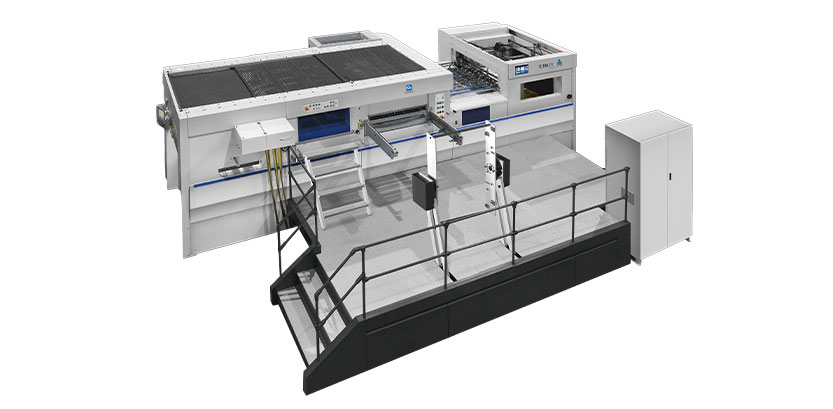
Now let’s connect the principles to a specific machine platform. Guowang’s C106DY Hot Foil Stamping Machine is a fully automatic heavy‑duty hot foil stamping and die‑cutting machine designed with maintenance accessibility in mind.
The equipment uses 20 independently controlled temperature zones, which can be heated and controlled separately — this saves energy and allows targeted temperature calibration without checking every zone manually. If one zone drifts, you recalibrate it individually rather than overhauling the entire heating system.
The hot stamping unit is controlled through a 19‑inch high‑definition touch screen. All settings — temperature, pressure, timing, foil feed parameters — are easily adjusted via touch. The interface also supports diagnostic displays, showing exactly which zone is active and if any sensor has failed.
For stamping pressure, the C106DY uses a Yaskawa servo control system with maximum stamping force up to 550 tons — sufficient for heavy‑duty embossing and die‑cutting. The machine includes pneumatic quick‑lock upper and lower chases, making die changes faster and reducing improper mounting risks.
From a maintenance standpoint, the C106DY includes a real‑time pressure monitoring option that alerts the operator if pressure deviates from set limits — catching problems before they affect stamping quality.
Before you commit to a new foil stamping line — or before next Monday’s shift — walk through this checklist with your operators. Build the maintenance log. Make the five‑minute end‑of‑shift routine non‑negotiable. That’s the difference between a machine that surprises you and one that just runs.
Need a printable maintenance log sheet for your hot foil stamping machines? Contact Guowang for a custom maintenance template tailored to the C106DY series. Share your typical shift schedule and production volume — their technical team can help you build a preventive maintenance schedule that fits your actual runtime, not a generic calendar.


 English
 Français
 Español
 Português
 عربي
عربي