
Application of Hot Foil Stamping in Book Covers and Leather Binding
A foil-stamped book cover communicates quality and tradition. Whether it’s a gold title on a classic leather binding, a delicate pattern on a cloth hardcover, or a debossed logo on a premium notebook, the finish defines the product’s value.
But achieving that perfect stamp requires more than just a Hot Foil Stamping Machine—it requires the right substrate preparation, die selection, and machine settings for each material. Guowang‘s hot foil stamping machines deliver micron-level precision with ±0.15 mm accuracy and up to 550 tons of pressure, making them ideal for the demanding requirements of book and leather finishing.
This guide covers the specific techniques for stamping on cloth, paper, genuine leather, and faux leather, as well as die selection, spine stamping considerations, and how to achieve deep embossed effects. Guowang‘s machines feature 20 independently controlled temperature zones with ±1°C accuracy, providing the control needed for these delicate materials.
Substrates Commonly Used in Bookbinding
Not all bookbinding materials respond to heat and pressure the same way. Understanding each substrate‘s behavior is the first step to a successful stamp.
Cloth Book Cloth
Woven fabric requires low pressure and medium heat. The weave texture can absorb some of the stamping detail, so a slightly higher temperature (110-125°C) helps the foil penetrate the fibers. Using a release sheet prevents the cloth from sticking to the die.
Paper Over Board
Similar to coated paper but thicker, paper-over-board covers need medium pressure and a temperature range of 100-115°C. The thicker board absorbs more heat, so slightly longer dwell time may be needed for a clean transfer.
Genuine Leather (Cowhide, Goatskin)
Organic material like leather demands careful temperature control. Too hot, and the leather can scorch or become brittle. The recommended range is 90-105°C with low pressure. Leather should be conditioned—slightly moist—before stamping for the best results.
Faux Leather / PU
Synthetic leather is more heat-sensitive than genuine leather. Temperatures above 100°C can cause melting or surface damage. The recommended range is 85-100°C with very low pressure. Always test on a scrap piece first.
Die Selection for Book Cover Stamping
The die determines the sharpness and detail of the stamped image. Choosing the right material for your run length and application is critical.
Brass Dies for Lettering
Brass dies are the industry standard for sharp, crisp lettering, especially for serif fonts. They offer excellent heat transfer and durability, making them ideal for long production runs where detail is paramount.
Magnesium Dies for Short Runs
Magnesium dies are a cost-effective alternative for short runs and prototypes. They are lighter and less expensive than brass but have a shorter lifespan. They are suitable for small-batch custom book projects.
Curved Dies for Book Spines
Book spines have a curved surface that requires a special contour die or a flexible backing to ensure even pressure distribution. A standard flat die will not conform to the spine‘s shape, resulting in an uneven or incomplete stamp. A curved die, often with a spring-loaded or rubber backing, is essential for a clean spine impression.
Temperature and Pressure for Different Book Cover Materials
Getting the temperature and pressure right is the most critical factor in achieving a quality stamp. The table below provides a starting point for each common bookbinding material.
| Material | Temperature (°C) | Pressure | Note |
|---|---|---|---|
| Cloth | 110-125 | Low | Use a release sheet |
| Paper cover | 100-115 | Medium | Standard setting |
| Genuine leather | 90-105 | Low | Test on scrap first; condition leather |
| Faux leather (PU) | 85-100 | Very low | Avoid melting; test on scrap first |
These are starting points. The optimal settings will depend on the specific material thickness, the foil type, and the machine‘s characteristics. Guowang’s C106Y features 20 independently controlled temperature zones with ±1°C accuracy, allowing for precise adjustments to match each substrate.
Stamping on Book Spines – Special Considerations
Book spines present unique challenges due to their curvature and the different construction methods used in bookbinding.
Spine Curvature
The rounded shape of a book spine requires a flexible backing or a curved die. A rigid, flat die will only make contact at the center of the spine, leaving the edges unstamped. Using a die with a slight curve or a resilient backing material ensures even pressure distribution across the entire spine surface.
Hollow vs. Tight Back
A hollow back (where the spine lining is separate from the book block) provides a firmer surface for stamping, as the pressure is not absorbed by the flexible joint. A tight back (where the spine is glued directly to the book block) is more flexible and may require lower pressure to avoid damaging the binding or creating cracks in the foil.
Avoiding Cracking on Spine Hinges
The hinge area of a book spine is a high-stress point. Applying pressure here can cause the foil to crack or the leather to split. The best practice is to design the stamp so it does not extend into the hinge area, or to use a lower pressure and a more flexible foil in this region. Guowang‘s machines support mirror-finish embossing and deep embossing/debossing in a single operation, but the operator must carefully control the pressure to avoid damaging the spine.
Achieving Deep Embossed Foil on Leather
For a truly premium finish, a deep embossed effect on leather creates a tactile and visual statement of quality.
Using a Counter-Die
A counter-die is a matching die that is placed beneath the material, creating a cavity for the raised or debossed design. This technique is essential for achieving a deep, three-dimensional impression, especially on thicker materials like leather.
Longer Dwell Time
Leather is a poor conductor of heat, so it takes longer for the heat to penetrate and activate the adhesive on the foil. A longer dwell time (the duration the die stays in contact with the material) is often necessary to achieve a deep bond without increasing the temperature, which could damage the leather. Guowang‘s machines allow for precise control of stamping speed and pressure, giving operators the flexibility to adjust dwell time as needed.
Conditioning Leather
Slightly moist leather stamps better. The moisture helps the leather fibers to compress and take on the die’s impression more readily. Lightly dampening the leather‘s surface with a spray mister before stamping can significantly improve the depth and clarity of the embossing. Always test on a scrap piece first to ensure the moisture doesn’t leave a mark.
Questions Bookbinders and Leatherworkers Ask
Can I stamp on leather with uneven grain?
Yes, but it requires a more flexible die and careful pressure control. A softer backing material or a die with a slight contour can help accommodate the uneven surface. Using a counter-die can also help distribute the pressure more evenly.
How to prevent foil from rubbing off book spines?
Foil rubbing off spines is often caused by insufficient adhesion (too low temperature or pressure) or the use of a foil that is not flexible enough for the spine’s curvature. Use a foil designed for flexible applications, and ensure the spine is properly cleaned and free of any oils or contaminants before stamping. Increasing the temperature slightly and ensuring sufficient pressure can also improve adhesion.
What is the best foil finish for dark leather?
For dark leather, metallic foils like gold, silver, or copper provide the most contrast. Pigment foils in lighter colors (white, cream, light blue) can also be very effective. The high-contrast finish ensures the stamped design is clearly visible. For a more subtle, tone-on-tone effect, a metallic foil with a matte finish can be used.
Choosing the Right Machine for Book and Leather Finishing
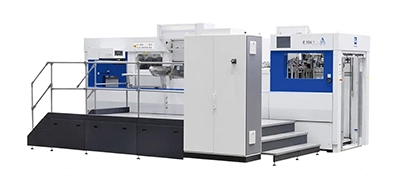
The C106Y Automatic hot foil stamping machine from Guowang Group is engineered for the precision and versatility demanded by book and leather finishing. With a maximum sheet size of 1060×760mm and speeds up to 6,500 sheets per hour for stamping, it is suitable for both high-volume production and complex, high-value projects. Its ability to handle materials from 90 to 2000 g/m² covers the full range of bookbinding substrates, from lightweight paper covers to thick, genuine leather bindings.
Share Your Book Cover Design for a Machine Recommendation
The right hot foil stamping machine can transform your bookbinding or leatherwork, elevating your products from ordinary to extraordinary. Whether you‘re producing classic leather-bound editions, modern cloth hardcovers, or custom notebooks, achieving a flawless foil finish requires the right combination of machine, settings, and technique.
Share your book cover design and material specifications with Guowang Group’s team. They can recommend the optimal machine configuration and provide guidance on die selection, temperature settings, and pressure adjustments to bring your vision to life.


 English
 Français
 Español
 Português
 عربي
عربي