
Four Finishing Steps, One Machine – Meet the Foil Stamping Machine That Cuts Waste and Setup Time
Every time you stamp foil, you pay for the scrap between images. Every minute spent setting up is a minute not producing. And every extra step – moving sheets from a stamping press to a separate die‑cutter – adds handling time and registration risk. A modern foil stamping machine solves all three problems. It integrates hot stamping, embossing, stripping, and blanking into one continuous process. It optimizes foil use, so less material ends up in the trash. And it’s designed for quick setup and easy operation. This guide walks through six key advantages of high‑performance hot stamping presses – from user‑friendly controls to multi‑function capability – and shows why a single‑pass machine can pay for itself faster than you think.
Six Ways a Modern Hot Stamping Press Improves Your Bottom Line
Here’s what a high‑performance foil stamping machine delivers, based on real product specifications.
1. User‑friendly – intuitive design for easy operation
Complex machinery often comes with a steep learning curve. Operators may take weeks to become proficient, and mistakes during setup can damage expensive tooling. A well‑designed foil stamping machine features an intuitive interface that reduces training time. A large touch screen organizes all settings logically – pressure, temperature, foil pull length, registration. Operators can learn the basics in a day and master job changeovers within a week. A foil stamping machine that is easy to use means less downtime, fewer errors, and happier employees.
2. Quick setup – short preparation time for a fast start
Traditional stamping presses can take hours to set up for a new job – adjusting pressure, aligning dies, threading foil. Quick‑setup design cuts that time dramatically. Recipe storage on the HMI recalls previous job parameters. Changeover from a wine label to a cosmetic box takes minutes, not hours. Over 200 changeovers per year, saving 150+ hours of productive time.
3. Foil efficiency – optimizes foil use, minimizes waste
Foil is expensive. A machine that wastes 20% of your foil is costing you thousands per year. Synchronous longitudinal and transverse foil feeding stamps multiple images from the same foil strip, reducing gaps. The result: more impressions per roll, lower material cost. If you spend $50,000 per year on foil, a 15% waste reduction saves $7,500 annually – over $37,000 in five years.
4. Multi‑function – integrates hot foil stamping & die‑cutting
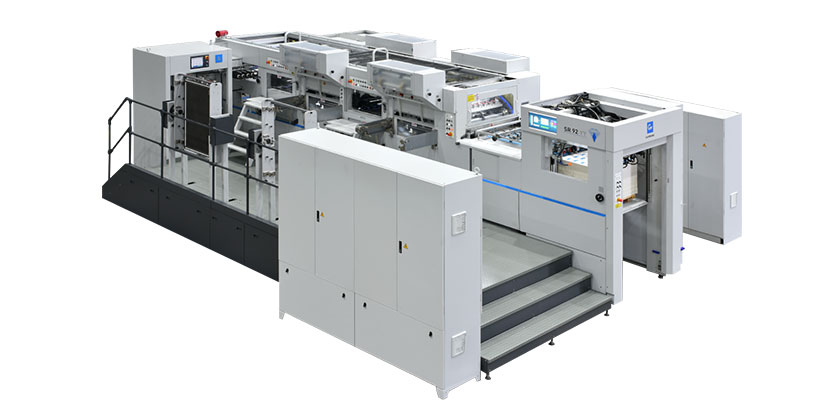
Why buy two machines when one can do both? This foil stamping machine handles hot foil transfer and precision die‑cutting on the same platform. No moving sheets between stations. No re‑registering. The integrated workflow also reduces floor space and capital expenditure.
5. One‑pass – completes stamping, embossing, stripping & blanking
Four finishing steps in one continuous pass. The sheet enters, and finished, stripped, blanked products exit. This eliminates separate stripping and blanking operations, saving labor and floor space. In traditional workflows, each additional step adds handling time and risk of damage.
6. Easy QC – integrated workflow simplifies quality control
When all steps happen on one machine, quality control is simpler. You inspect the finished product, not intermediate stages. Defects are caught immediately, not after three separate operations. This leads to fewer rejects and less waste.
What “One‑Pass” Means for Your Production Floor
Let’s compare two workflows: traditional separate machines vs. an integrated foil stamping machine.
| Workflow step | Separate machines | Integrated one‑pass machine |
|---|---|---|
| Hot stamping | Machine #1 | Same machine |
| Embossing | Machine #1 (or separate) | Same machine |
| Stripping | Separate station | Same machine |
| Blanking | Separate die‑cutter | Same machine |
| Material handling | Transfer sheets between machines | Sheets never leave the gripper system |
| Registration risk | Each transfer risks misalignment | One registration throughout |
A foil stamping machine that combines all four steps reduces labor, floor space, and error rates.
The Hidden Cost of Foil Waste – And How to Cut It
Foil waste is often overlooked. Let’s put numbers on it.
Typical waste in conventional stamping
Conventional machines pull foil in one direction only. Between stamps, there are unprinted gaps – sometimes 20‑30% of the foil. That gap is waste.
How synchronous feeding reduces waste
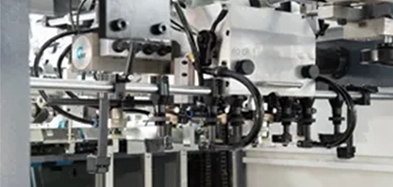
Synchronous longitudinal and transverse feeding pulls foil in both directions. Stamps are placed closer together. Waste drops to 5‑10%. The system also automatically calculates the optimal foil pull length and simulates the layout on the screen.
Real‑world savings
A converter running 10,000 sheets per day with 6 foil colors can save $15,000‑$20,000 per year on foil alone. The machine pays for part of itself just through waste reduction.
Quick Setup – What It Really Takes to Change a Job
Ask any finishing department manager: the most frustrating part of the day is changeover.
Traditional changeover
-
Unload old die and foil rolls
-
Load new die and foil
-
Adjust pressure mechanically (trial and error)
-
Align registration (test sheets, adjust, repeat)
-
Total time: 60‑120 minutes
Modern quick setup
-
Recall stored recipe on HMI
-
Swap die and foil (tool‑less or quick‑clamp)
-
Run a few test sheets
-
Fine‑tune pressure via touch screen (0.01mm precision)
-
Total time: 15‑20 minutes
Over 200 changeovers per year, that saves 150+ hours of productive time – equivalent to nearly four extra work weeks.
User‑Friendly Design – Why It Matters for Your Operators
A machine that frustrates operators will have high turnover and frequent errors.
Intuitive HMI
A 19‑inch high‑definition touch screen organizes settings logically. Pressure, temperature, foil pull length, and registration are all on one screen. Operators don’t need to memorize codes or navigate deep menus.
Guided setup
The system walks operators through each step of a job change. It asks for foil type, pressure, and repeat length. Then it automatically calculates the optimal foil feed pattern. This reduces the mental load on operators and speeds up training.
Error prevention
If an operator enters an out‑of‑range value (e.g., pressure too high for the paper), the machine warns them before starting. This prevents damage to tooling and substrate.
Where to Find a Foil Stamping Machine Built Like This
All the features described above – one‑pass capability, synchronous foil feeding, quick setup, user‑friendly controls, and integrated die‑cutting – are available from GUOWANG, a post‑press equipment manufacturer founded in 1993. With over 400 employees, 160,000 m² of factory space, and more than 100 patents, GUOWANG has invested over 30 million RMB in advanced production lines. Their machines carry CE certification and are exported worldwide.
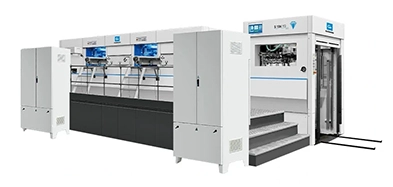
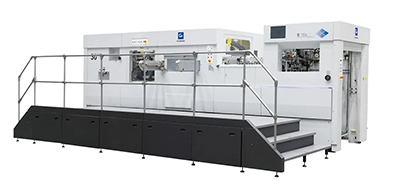
The GUOWANG hot stamping series is designed to deliver high precision, high pressure, and high speed, meeting the demands of converters who need both quality and efficiency.
See a One‑Pass Demo
You don’t have to imagine the savings. GUOWANG can run a demo of their foil stamping machine using your substrate and your foil. Watch the sheet go in and the finished, stripped, blanked product come out. Time the setup. Measure the foil waste.
A foil stamping machine that pays for itself through waste reduction, faster changeovers, and lower labor costs is within reach.


 English
 Français
 Español
 Português
 عربي
عربي