
Can a Hot Foil Stamping Machine Handle Thick Cardboard and Rigid Materials?
You're running a job on rigid box wraps or point‑of‑purchase displays. The material is thick — 2mm, 3mm, maybe even 4mm. The customer wants foil stamping on it, and you need to know if your machine can handle it. The short answer is yes — within certain limits. But understanding what those limits are and how to work within them is the difference between a successful run and a costly failure.
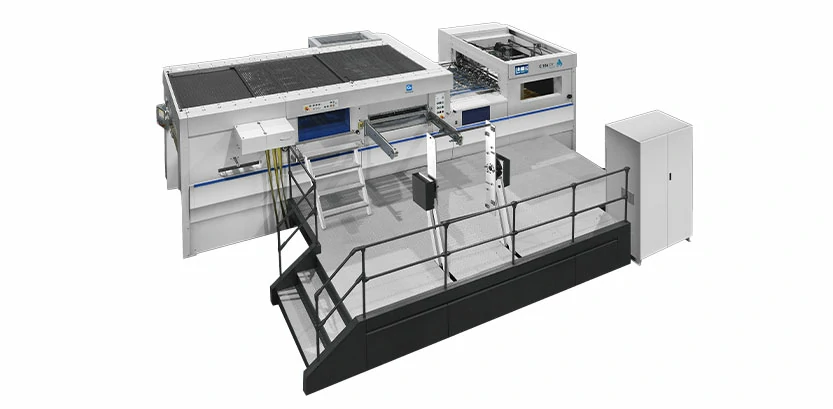
A foil stamping machine designed for heavy substrates can handle thick cardboard and rigid materials, but not every machine is built for the task. The Guowang C106Y handles paperboard from 90 to 2000g/m² and corrugated board up to 4mm thick, with 350 tons of die‑cutting force and 20 independently controlled heating zones. This guide explains what "thick" means in practice, what machine features matter, and how to set up for successful stamping on heavy materials.
Defining "thick" — what thickness ranges are realistic
Not all "thick" materials are the same. The machine's specifications define what it can handle.
Typical maximum thickness — 2mm to 4mm depending on the model
Most industrial foil stamping machines handle paperboard from 90 to 2000g/m², with corrugated board up to 4mm thick on models like the C106Y. That translates to approximately 2mm to 4mm in physical thickness, depending on the board's density. For reference, 2000g/m² paperboard is roughly 3-4mm thick, while 4mm corrugated board is typical for display applications.
Factors limiting thickness — feeding, platen opening, and pressure
Three factors determine a machine's maximum material thickness. The feeding mechanism must be able to separate and transport rigid sheets without jamming. The platen opening height must accommodate the material's thickness plus the die and backing. The pressure force must be sufficient to compress the board and achieve full foil contact. The C106Y provides 350 tons of die‑cutting force, which is adequate for most thick board applications.
Very thick materials (>5mm) — custom solutions
Materials exceeding 5mm typically require custom solutions — slower speeds, manual feeding, or specialized tooling. Some applications may need a different machine altogether. Always consult the manufacturer's specifications before attempting to run materials beyond the recommended range.
Feeding challenges with rigid substrates
Thick, rigid materials behave differently than thin paper. The feeding system must be adjusted accordingly.
Manual vs. automatic feeding
Automatic feeding works well for most paperboard up to 2000g/m². The C106Y's feeder uses 4 suction cups for lifting and 4 for transferring, ensuring stable and fast paper feeding. However, very thick or warped boards may require manual feeding to prevent jams and ensure proper sheet positioning.
Sheet separation issues
Thick boards do not flex, so air blast separation is less effective. The feeder's suction cups must lift the top sheet cleanly without picking up the sheet beneath. The C106Y's feeder is designed to handle this with powerful suction and precise timing, but operators may need to adjust suction pressure for heavier materials.
Preventing double feeding
Double feeding occurs when two sheets are pulled through together. To prevent this, adjust the side guides wider to accommodate the thicker material. The C106Y's side layers can be shifted from pull layers to push layers to fit different formats, giving operators flexibility for varying material thicknesses.
Pressure requirements for thick board
Thick materials require higher pressure and more even distribution to achieve consistent foil transfer.
Higher tonnage needed — compress the board
Thick cardboard and rigid materials are less compressible than thin paper. The stamping pressure must be sufficient to bring the foil into full contact with the board's surface. The C106Y delivers 350 tons of die‑cutting force — enough to handle thick paperboard and corrugated materials. For thinner machines, pressure may be the limiting factor.
Even pressure distribution — thick boards amplify unevenness
Thick materials amplify any unevenness in the platen or die. A slight high spot that would be invisible on thin paper becomes a visible defect on rigid board. The C106Y's 20 independently controlled heating zones allow precise temperature management across the stamping area, which helps maintain consistent foil transfer.
Using pressure-indicating film — verify before production
Pressure‑indicating film (such as Fuji Prescale) shows the pressure distribution across the stamping area. Run a test sheet with the film before starting production. Uneven pressure appears as color variations — dark areas indicate high pressure, light areas indicate low pressure. Adjust the platen or die accordingly until the pressure is uniform.
Die considerations for thick substrates
The die itself must be matched to the material thickness for consistent results.
Die height and heating — thicker dies retain heat better
Thicker dies retain heat more effectively, providing more consistent temperature during long runs. However, they also take longer to heat up. The C106Y's heating zones range from 10°C to 200°C, with 20 independently controlled zones allowing precise temperature management. For thick materials, aim for the higher end of the temperature range.
Make‑ready for thickness variation — use compensating tapes
Board thickness can vary across a sheet and between batches. Compensating tapes (also called make‑ready tapes) are applied to the die backing to compensate for localized thickness variations. This ensures even pressure across the entire stamping area, preventing incomplete foil transfer on thinner areas and crushing on thicker areas.
Hardened steel dies — for long runs on abrasive thick board
Thick paperboard and corrugated materials contain abrasive fillers that accelerate die wear. For long‑run jobs, specify hardened steel dies rather than brass or copper. The additional cost is justified by the extended die life and consistent stamping quality over thousands of sheets.
Real‑world applications for thick board stamping
Thick board stamping appears in several packaging and display applications.
Rigid box wraps — stamp before or after wrapping
Rigid boxes for luxury goods — perfumes, watches, premium spirits — often feature foil‑stamped wraps. Stamping can be done before wrapping (on flat board) or after (on the assembled box). Flat‑board stamping is faster and more consistent, while post‑assembly stamping allows for precise placement on the finished box.
Point‑of‑purchase displays — large format thick board
In‑store displays and signage often use thick corrugated or solid board, up to 4mm thickness. The C106Y handles corrugated board up to 4mm, making it suitable for large‑format POP applications. For larger sheet sizes, the 1060×760mm maximum sheet size provides ample area for most display components.
Game boards and puzzles — direct stamping on thick chipboard
Game boards and puzzles are often stamped directly on thick chipboard. The stamping must be precise and durable, as the boards are handled repeatedly. The C106Y's 350‑ton force and 20 heating zones provide the precision and consistency required for these applications.
Questions about thick material stamping
Q: Does stamping on thick board require longer dwell time?
A: Yes. Thick materials require more time for the heat to penetrate the board and activate the foil's adhesive. Increase the dwell time (the time the die remains in contact with the board) by 10-20% compared to thin paper settings. The exact adjustment depends on the board's thickness and density.
Q: Can I stamp on corrugated cardboard?
A: Yes, but with limitations. The C106Y handles corrugated board up to 4mm thick. Stamping on corrugated board requires careful pressure control — too much pressure crushes the flutes; too little results in incomplete foil transfer. A smooth, flat surface is essential. Stamping on the liner side (the flat outer layer) produces the best results.
Q: What is the most common mistake when stamping thick materials?
A: Insufficient pressure distribution. Operators often increase overall pressure to compensate for uneven contact, which can crush the board or damage the die. The correct approach is to adjust the make‑ready (using compensating tapes) to achieve even contact at the correct pressure. Pressure‑indicating film is the most reliable way to verify even distribution.
Matching machine capability to your material
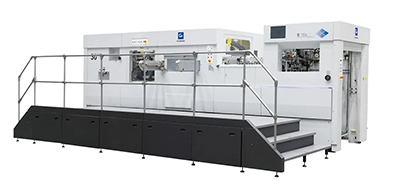
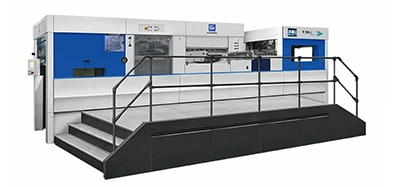
The Guowang C106Y is a 350‑ton machine with a maximum sheet size of 1060×760mm, handling paperboard from 90 to 2000g/m² and corrugated board up to 4mm. Its 20 independently controlled heating zones, ranging from 10°C to 200°C, provide precise temperature management across the stamping area. Maximum stamping speed is 6500 sheets per hour, with hologram stamping at 5500 sheets per hour.
Before running a thick material job, verify the material thickness against the machine's specifications. Run a test with pressure‑indicating film to verify even distribution. Adjust the die and make‑ready as needed. If the material exceeds 4mm, consult the manufacturer for custom solutions.
Need to test thick materials on a foil stamping machine? Contact Guowang for a material test or setup consultation. Share your material type, thickness, and sample size — their team can recommend the right machine configuration and die setup for your specific application.


 English
 Français
 Español
 Português
 عربي
عربي