
Using Hot Foil Stamping for Cosmetic Packaging – Materials and Design Tips
You‘re looking at a new lipstick carton design. The brand wants gold — not printed gold, not simulated gold. Mirror gold that catches the light from across the room. The kind of finish that makes a customer pick it up just to feel the embossed logo under their thumb. That’s what a foil stamping machine delivers.
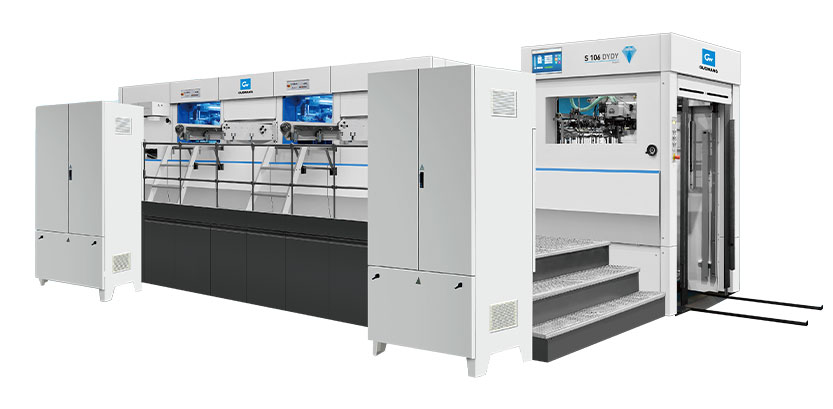
Cosmetic packaging is unlike any other category. The shelf is crowded. The consumer is making a split‑second decision. And the packaging itself is part of the product experience — the unboxing moment, the tactile memory, the Instagram shot. Hot foil stamping has become the signature finishing technique for beauty brands because it creates metallic luster and premium tactile effects that cannot be achieved with conventional printing inks. This guide covers the materials that take foil best, the foil finishes that resonate with beauty consumers, the design rules that prevent production headaches, and the workflow that turns a carton design into a finished product. The Guowang S106DYDY automatic hot stamping machine — with its 1060×760mm sheet size, 20 independently controlled heating zones from 30 to 200°C, 550 tons of die‑cutting force, and speeds up to 5,000 sheets per hour for stamping — is built for the precision and efficiency that cosmetic packaging demands.
Three reasons beauty brands choose foil
Cosmetic brands choose hot foil stamping for three reasons that printing alone cannot match.
Metallic shine that ink can‘t touch
Metallic foils create a mirror‑like reflective quality that printed metallic inks cannot replicate. Hot stamping transforms ordinary packaging into high‑end presentation pieces, commonly applied to lipstick tubes, serum bottles, compact cases, and gift boxes. The reflective logos and precise borders help products stand out on crowded shelves and justify higher price points.
Survives the supply chain
Cosmetic packaging goes through a lot — warehouse storage, shipping, shelf stocking, and countless consumer touches before purchase. Hot foil stamping produces scratch‑resistant and rub‑resistant decorations that maintain their brilliance through repeated handling. Unlike printed finishes that can wear off, foil is fused onto the surface.
One process, many materials
Hot stamping works across the full range of cosmetic packaging: folding cartons, rigid boxes, lipstick tubes, compact cases, serum bottles, perfume cartons, and laminated tubes. The dry transfer process bonds foil to coated paperboard, plastics like PP and PET, laminated tubes, and even glass (via sleeve) using heat and pressure.
What stamps well — and what doesn‘t
Not every material accepts hot foil the same way. Matching the right substrate to the right foil is the first step to a successful run. Different materials react differently to hot stamping; smooth surfaces are recommended while textured or rough surfaces can cause foil breaks and incomplete transfer.
Coated board — the everyday workhorse
Coated paperboard, particularly SBS (solid bleached sulfate) and CCNB (clay coated newsback), is the most common substrate for cosmetic folding cartons. The smooth, non‑porous surface takes hot stamping foils with clean edges and vibrant gloss. For gloss‑coated papers, ensure high temperature and sufficient dwell time during hot stamping for better adhesion. The Guowang S106DYDY handles paperboard from 90 to 2000 g/m², covering everything from lightweight cartons to heavy rigid boxes.
Plastics — trickier, but doable
PET, PP, PE, and PVC are common in cosmetic packaging — tubes, compacts, and bottles. These non‑absorbent, smooth surfaces require hot stamping foils with plastic‑compatible adhesives. Surface pre‑treatment (like corona treatment) may be needed for certain plastics. For plastic tubes, process parameters — temperature, dwell time, and pressure — govern adhesion; too little heat leads to incomplete transfer, too much can distort thin‑wall cosmetic tubes.
Laminated tubes — foil on the label or the tube itself
Laminated tubes combine multiple layers — often aluminum foil sandwiched between plastic or paper layers. Hot stamping can be applied directly to the laminate or to a label that is later applied. Synthetic papers like Tyvek or PVC‑based sheets can also take hot stamping foils well, provided they are heat‑stable.
Below is a quick reference table for substrate compatibility:
| Substrate | Best Foil Type | Key Consideration |
|---|---|---|
| Coated paperboard (SBS/CCNB) | Standard hot stamping foil | Higher temperature for gloss coatings |
| PET/PP plastics | Plastic‑compatible adhesive foil | Surface pre‑treatment may be required |
| Laminated tubes | Hot stamping foil with flexible adhesive | Match die curvature to tube geometry |
| Uncoated/textured paper | Aggressive‑adhesive foil | Requires high opacity for clean transfer |
| Glass (via sleeve) | Standard hot stamping foil | Foil applied to sleeve, not direct to glass |
Picking the right foil for the brand
The foil you choose shapes how the consumer perceives the brand. Different finishes send different signals.
Mirror gold and silver — never goes out of style
Mirror gold and silver deliver the highest reflectivity and the strongest “luxury” signal. These are the go‑to choices for prestige skincare, fragrance, and high‑end makeup. The crisp metallic accents create strong shine and rich metallic depth.
Matte and rose gold — quiet luxury
Matte finishes are quieter but equally premium. Rose gold, in particular, has become a signature finish for contemporary beauty brands — soft, warm, and photogenic. Matte metallic foils let designers match exact brand palettes and play with contrast.
Holographic — for the Instagram crowd
Holographic foils create shifting, iridescent effects that appeal to youth‑oriented brands and limited‑edition collections. These foils are eye‑catching on shelf and highly Instagrammable.
Pigment foils — color without ink
Pigmented foils deliver opaque white or bright colors — red, blue, green — that sit on top of the substrate without the need for a separate printed base. This is useful when stamping on dark or colored substrates where a metallic foil might not provide enough contrast.
Design rules that save you from scrap
Cosmetic packaging often involves small components and fine details. These design guidelines prevent common hot stamping failures.
Fine lines — how thin is too thin?
Very fine lines may not transfer cleanly. The minimum line thickness for hot stamping is generally ≥0.2mm; thinner lines may break or fail to transfer completely. For reverse text (recessed or hollow elements), the minimum hollow size should be ≥0.2–0.3mm for fine work, and ≥0.5mm for mass production safety. Very small hollow areas tend to fill in or blur during hot pressing.
Vector artwork — raster won‘t cut it
High‑definition artwork is essential. Avoid bitmap images, as they cause jagged edges or blurred details. Always use vector files from Adobe Illustrator (AI) or CorelDRAW (CDR).
Heat expands paper — plan for it
When combining hot stamping with printed graphics, leave allowance for heat expansion. The substrate expands slightly under the heat of the stamping process, which can shift registration. For reverse hot stamping (background stamping with unfoiled main design), large stamping areas require very stable material surfaces. During the proofing stage, run physical samples so you can observe the embossed height and the reflective effect firsthand.
Less foil, more impact
On small cosmetic components like lipstick tubes, excessive metallic coverage can reduce contrast. Designers typically keep hot‑stamped areas below 20–30% of the visible face and pair them with high‑opacity inks beneath. Foil stamping is best for bold statements — logos, product names, or simple elegant borders.
From artwork to finished carton — the run
A typical cosmetic carton run follows a sequence that balances quality with efficiency.
Design approval — The brand signs off on artwork, foil placement, and substrate selection. Vector files are prepared for die engraving.
Die engraving — Brass or copper dies are precision‑engraved with the design. For complex jobs combining foil and embossing, 7mm precision‑engraved brass dies are common.
Machine setup — The Guowang S106DYDY is configured with the correct temperature based on board type and foil. The 20 independently controlled heating zones allow precise temperature management from 30 to 200°C. The pneumatic quick lock system and high‑precision servo pressure regulating system enable short changeover times.
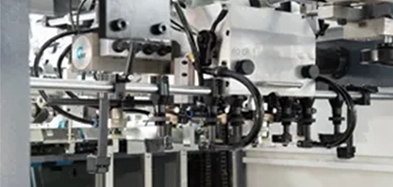
Test run — Run 10–20 sheets to check adhesion, registration, and appearance. The synchronous longitudinal and transversal foil feeding system enables stamping in both directions, reducing foil usage and shortening replacement time.
Quality check — Inspect adhesion (foil should not peel), appearance (no pinholes or incomplete transfer), and register (foil aligned with print). For folding cartons, check that foil does not crack along crease lines.
Full production — Run at the machine‘s max stamping speed of 5,000 sheets per hour, with the automatic lubrication system adjusting refueling intervals through the touch screen.
Three questions packaging teams ask
Q: Can I stamp on soft‑touch coated boxes?
A: Yes, but with caution. Soft‑touch coatings have textured, matte surfaces that can cause foil breaks or incomplete transfer. Use hot stamping foils specifically formulated for textured substrates, which have more aggressive adhesives. Test on sample sheets before committing to a full run, and expect lower production speeds than on smooth coated board.
Q: How do I avoid foil cracking on carton crease lines?
A: Foil cracking along crease lines is a common issue when foil is applied across a fold. The solution is to keep foil away from crease lines wherever possible. If foil must cross a crease, use a more flexible foil (some holographic foils are more brittle than metallics) and ensure the creasing rule is set correctly. During the proofing stage, request physical samples to observe the embossed height and foil behavior along folds. Reducing stamping temperature slightly can also help.
Q: What is the typical production speed for cosmetic cartons?
A: On a machine like the Guowang S106DYDY, the max stamping speed is 5,000 sheets per hour. However, actual production speed depends on the complexity of the design, the substrate, and the foil type. Simple single‑color foil logos on coated board can run close to max speed. Multi‑color foils, holographic foils, or designs with fine details may require slower speeds to maintain quality. Plan for 3,500–4,500 sheets per hour as a practical target for most cosmetic carton work.
How Guowang‘s S106DYDY fits the job
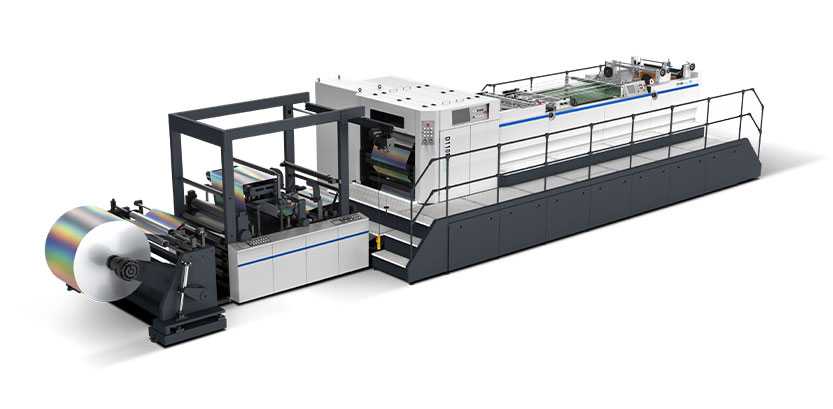
The S106DYDY Automatic Hot Stamping Machine is built around the specific demands of high‑end packaging production. The sheet size of 1060×760mm (maximum) and 450×370mm (minimum) accommodates everything from small lipstick cartons to large perfume gift boxes.
The 20 independently controlled heating zones, ranging from 30 to 200°C, allow precise temperature management across the stamping area — critical when different areas of the same sheet require different heat levels. The 550‑ton die‑cutting force ensures deep, consistent embossing even on heavy board stock up to 2000 g/m².
The synchronous longitudinal and transversal foil feeding system enables stamping in both directions, reducing foil usage and shortening replacement time. The 19‑inch high‑definition touch screen puts all settings and functions within easy reach, with an intuitive interface developed specifically for this equipment. The automatic lubrication system adjusts refueling intervals through the touch screen, reducing maintenance downtime.
For a cosmetic packaging operation running high‑volume runs with frequent design changes, the S106DYDY combines the speed, precision, and flexibility needed to keep brand clients satisfied.
Ready to test hot foil stamping on your cosmetic packaging design? Contact Guowang for a sample run on your carton or tube design. Share your substrate type, target foil finish, and artwork files — their team can provide die engraving recommendations and machine setup parameters for your specific application.


 English
 Français
 Español
 Português
 عربي
عربي