
Does a 20-Zone Heating Foil Stamping Machine Save Energy vs Standard Units?
Every production manager has faced the dilemma: investing in advanced equipment with higher upfront costs versus sticking with familiar, standard technology. When it comes to adding high-quality metallic finishes to packaging or labels, the operational expenses—especially electricity—often become the deciding factor.
You might be asking: Does a machine with 20-zone heating actually use less power than a standard unit, or is it just another spec sheet battle?
The short answer is yes, but the real value lies in how it saves energy. It’s not just about lower wattage; it’s about precision, reduced waste, and eliminating unnecessary power draw. To understand this, we need to break down the fundamental difference in how these two systems generate and maintain heat.
Traditional Heating: The "Overshoot and Idle" Model
Standard heating units typically rely on one or two large heating cartridges inside the main roller. This design is simple but inefficient. The system heats the entire massive roller body to a target temperature. However, due to thermal inertia, the roller often overshoots the set point. Then, it must cool down passively before the heating kicks in again.
This creates a wasteful cycle of continuous, high-power on/off switching, akin to driving a car by constantly flooring the accelerator and then slamming on the brakes. Furthermore, the entire roller surface is heated uniformly, even when your substrate is only 300mm wide. This means you are paying to heat the roller's edges, which are not even in contact with the material—a direct loss of energy.
How 20-Zone Heating Changes the Equation
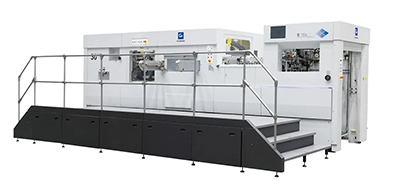
A machine equipped with 20-zone heating technology, such as advanced models found in modern production lines, operates on a completely different principle. Instead of one large heat source, the heating element is divided into multiple independent zones along the roller’s width and sometimes circumference.
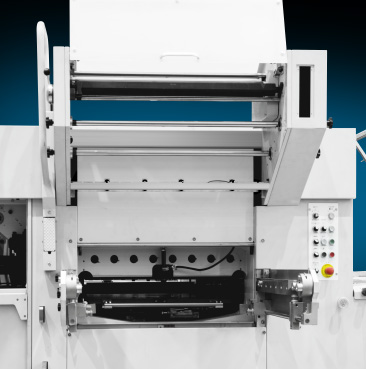
Here is where the energy savings become tangible:
-
Selective Activation: You can activate only the zones required for your specific web width. For a narrow label, you might only need 6 out of 20 zones. The other 14 zones remain cold, consuming zero electricity. A standard unit would heat its entire surface, wasting an estimated 30-70% of its energy on non-productive areas.
-
Precision PID Control: Each zone has its own PID controller. This allows for real-time, microscopic adjustments. The system delivers exactly the amount of power needed to maintain the set temperature, eliminating the wasteful "overshoot and idle" cycle. The result is a steady, lower average power draw.
-
Faster Heat-Up & Recovery: A smaller thermal mass per zone heats up much faster than a massive single roller. This reduces idle pre-heating time and associated energy costs, especially during job changeovers.
The Real-World Impact: Beyond the Electricity Bill
To visualize the difference, consider the following comparison based on typical operational data for 8 hours of continuous narrow-web foil stamping:
| Feature | Standard Single-Zone Unit | 20-Zone Heating Unit |
|---|---|---|
| Avg. Power Consumption (8 hrs) | 12 - 18 kWh | 4 - 7 kWh |
| Energy Waste (Edge Heating) | High (30%+) | Near Zero |
| Heat-Up Time (from cold) | 25-40 minutes | 8-12 minutes |
| Temp. Fluctuation During Run | ± 5-8°C | ± 1°C |
| Waste from Overheating | Moderate to High | Very Low |
But the savings don't stop at direct electricity use. The superior temperature stability of a 20-zone system directly reduces material waste. How? Consistent heat means consistent foil transfer. Fewer rejected labels, less wasted substrate, and less spoiled foil all represent embedded energy that you didn't waste producing scrap.
As one quality manager at a mid-sized label house noted, "We switched to an energy-optimized foil decoration system not for the energy savings, but for quality. After a year, we calculated that the power reduction alone paid for 18% of the new machine's cost. The drop in scrap was a bonus."
Making the Smart Decision for Your Operation
So, is a 20-zone unit the right choice for every application? If your operation runs the same wide-web job 24/7 with no changeovers, a standard unit might be simpler. However, for the vast majority of converters who handle multiple job sizes, short runs, or high-value materials, the 20-zone technology is unequivocally superior.
Here is a quick decision guide:
-
Choose a Standard Unit if: You run the same, maximum-width job continuously, energy costs are very low in your region, and quality consistency is not your primary concern.
-
Choose a 20-Zone Unit if: You have variable web widths, frequent job changes, high energy costs, or require tight quality control (e.g., for pharmaceutical or cosmetic packaging).
Ultimately, investing in precision heating is a classic case of paying for efficiency. The initial capital outlay is higher, but the return comes from lower utility bills, less waste, and higher machine uptime.
If you’re looking for a more professional experience and want to explore specific setup options for your unique production environment, you can learn how modern foil stamping solutions are engineered for both energy savings and output quality. The right technology doesn't just add foil to your product—it adds value back to your bottom line.


 English
 Français
 Español
 Português
 عربي
عربي