
Best Temperature and Pressure Settings for Foil Stamping on Different Substrates
A gift box factory switches from metallic gold foil to a holographic pattern on the same coated paperboard. The temperature that worked perfectly for the gold foil now leaves the hologram looking washed out. A leather goods maker runs a batch of natural vegetable‑tanned leather at the same settings used for chrome‑tanned leather—and ends up with scorched edges. A plastic parts manufacturer stamps a batch of ABS parts at the same temperature that worked for PP, and the foil lifts off after cooling. No single setting works for all substrates. A Foil Stamping Machine transfers metallic or pigment foil onto substrates using controlled heat and pressure, but the relationship between temperature, pressure, dwell time, and the substrate’s surface chemistry determines whether the foil transfers cleanly, adheres permanently, or fails completely. This guide provides recommended starting parameters by substrate type, explains how to fine‑tune using incremental test strips, and helps you build a parameter library that eliminates trial‑and‑error waste.
Heat, pressure, and time – how they work together
Foil stamping relies on three interdependent variables. Temperature activates the release layer and the heat‑activated adhesive on the foil. The heated die presses the foil against the substrate, and the heat triggers the adhesive to bond to the surface. Pressure ensures the foil makes full contact with the substrate. Without enough pressure, the adhesive cannot penetrate the substrate’s surface texture. Too much pressure can crush soft materials or distort the stamped image. Dwell time determines how long the heat and pressure are applied. Longer dwell allows heat to penetrate thicker substrates but risks scorching heat‑sensitive materials.
The relationship between the three is not linear. A 5°C temperature increase can compensate for a 0.2‑second shorter dwell time, but it can also push a sensitive substrate past its scorch point. Advanced flat‑bed foil stamping machines use multiple independently controlled heating zones with temperature accuracy maintained within ±1°C across the entire stamping area, allowing operators to fine‑tune profiles for different substrates without guesswork.
What works for paper may ruin plastic – a substrate cheat sheet
| Substrate | Temperature Range (°C) | Pressure (relative) | Notes |
|---|---|---|---|
| Uncoated paper | 80–120 | Medium | Wide window; start low and increase; avoid warping |
| Coated paper board | 110–150 | Medium‑high | 120-150°C typical for cylinder machines; test for blistering |
| PET plastic | 120–180 | Low‑medium | Higher temperature needed; pre‑test adhesion; ensure surface treatment |
| Genuine leather | 90–130 | Low | Use resilient backing; light colors scorch easily |
| Solid wood | 120–150 | High | Pre‑heat recommended; resin bleed can interfere |
| Woven fabric | 85–110 | Very low | Protect with release sheet; test on scrap first |
Temperature ranges vary by foil type and machine configuration. On flat‑bed and up‑and‑down machines, coated paper stamps at 110‑150°C. On cylinder machines, the same material may require 120‑160°C. Rotary machines run even higher, typically 160‑205°C. For plastic substrates like PET, stamping temperature ranges 160‑180°C at 4‑5 m/min transfer speed. For PVC and ABS, 120‑180°C is typical.
Why paper, plastic, and leather each need a different strategy
Porous soaks up heat, non‑porous reflects it
Porous substrates like paper and uncoated board absorb heat more readily, requiring lower die temperatures to achieve good adhesion. The adhesive layer activates quickly because there is less thermal mass to heat. Non‑porous surfaces such as plastic films and coated boards reflect heat and do not absorb the adhesive, requiring higher temperatures to soften the substrate surface enough for mechanical interlocking. The PET film in the foil itself provides a base that carries the decorative layer through the stamping process.
Watch out for scorch – leather and fabric are unforgiving
Leather, thin paper, and some plastics scorch easily when the die temperature exceeds a narrow threshold. Light‑colored leathers are especially vulnerable; a 10°C overshoot leaves a darkened edge that cannot be removed. For leather, stay within 90‑130°C and start at the lower end of the range. For fabric, 85‑110°C is recommended. Foils run too hot can flood and close in fine details. Modern foil stamping machines with zone‑independent heating control allow different temperature profiles across the stamping area, which is particularly useful when stamping large sheets that span multiple material types or thickness variations.
Smooth vs. rough – how surface texture changes pressure needs
Smooth, glossy surfaces require less pressure because the foil contacts more of the substrate area. Rough, textured surfaces need higher pressure to push the foil into the valleys of the substrate. Hard materials like wood and rigid plastic require higher pressure and shorter dwell time. Soft materials like leather and fabric require lower pressure and longer dwell to avoid crushing the surface. High‑precision foil stamping equipment adjusts pressure in 0.01mm increments, allowing precise tuning for different substrate surface characteristics.
A simple test strip method that ends guesswork
When you encounter a new substrate, do not guess. Run an incremental test strip. Create a test pattern with multiple zones at different temperature and pressure combinations. Mark the zones on a test sheet and run it through the machine. For each zone, inspect adhesion quality, sharpness of fine details, presence of scorching, and resistance to tape pull. Once you find the combination that works, record it in a log. The key is to always test on scrap before proceeding on your work piece. The foil stamping process relies on heat, pressure, and time. Documenting successful parameters helps eliminate future setup waste. Integrated systems that monitor foil consumption and adjust stamping pressure through a touch screen make parameter recall and adjustment faster.
How to read pressure needs from the material itself
Leather and fabric – go easy on the squeeze
Leather, fabric, and soft plastics compress under pressure. If you use the same pressure settings as for paper, you will crush the material, distort the stamped image, and may even cut through thin leather. For leather, use low to moderate pressure with dwell time at the longer end of the range. For fabric, the pressure should be very low—just enough to bring the foil into contact. Using a resilient backing pad can help distribute pressure and protect the material‘s surface texture.
Wood and rigid plastic – press harder, dwell shorter
Wood, rigid plastics, and thick board do not compress. Pressure must be high enough to force the foil into the surface texture, but the dwell time can be shorter because the heat transfer is direct. For wood, recommended temperature range is 120‑150°C with relatively high pressure. Pre‑heating the wood surface helps resin flow rather than scorching. For hard plastics like ABS and polycarbonate, higher pressure and shorter dwell produce the best results.
Use pressure‑indicating film to catch uneven spots
Pressure distribution across the stamping area must be uniform. Use pressure‑indicating film (also called Prescale film) to check pressure distribution. Place a sheet between the die and the substrate, run a stamping cycle, and examine the color density. Uneven coloration indicates a need to level the platen or adjust the pressure mechanism. Machines with side and front lay photocells and adjustable sensitivity help ensure consistent pressure distribution across the full sheet.
Four substrate‑specific traps that ruin good foil
Coated paper – blistering from trapped moisture. When the coating contains moisture or volatiles, rapid heating turns them to vapor, creating bubbles under the foil. Reduce temperature by 5‑10°C and increase pre‑dwell time to allow moisture to escape before the foil transfers. A 5°C reduction while maintaining dwell time often resolves the issue.
PET plastic – foil lifting after cooling. The problem is not the stamping—it is the cooling mismatch. The foil adhesive contracts at a different rate than the substrate, creating stress that lifts the foil. Increase dwell time to allow more gradual cooling in the machine, or use a foil formulated for plastic substrates with a more flexible adhesive layer. For PET, recommended stamping temperature is 160‑180°C on rotary equipment.
Leather – scorch marks on light colors. Light‑colored leathers are the most difficult to foil stamp. The tannins in leather darken when overheated. Start at 90°C and increase in 5°C increments, never exceeding 120°C on light leather. Use a protective release sheet between the die and the foil if the die is larger than the stamping area.
Wood – resin bleeding interfering with adhesion. Some wood species release natural oils and resins when heated. These create a barrier between the foil adhesive and the wood surface, causing poor adhesion or a tacky residue after stamping. Pre‑clean the wood surface with a solvent that removes surface oils, or pre‑heat the wood to drive off resins before applying the foil.
Your parameter questions, answered
Q: Can I use the same temperature for the same substrate from different suppliers? A: No. Different suppliers use different coating formulations, paper stocks, and additive packages. A coated board from one mill may contain more moisture or a different clay coating than another, changing the heat transfer characteristics. Even the same substrate from the same supplier can vary between batches. Always run a test strip with each new roll or lot before full production.
Q: What is the safest starting temperature for a completely unknown material? A: Start at 90°C with low pressure and 0.5‑second dwell. Run a test strip and increase temperature in 5‑10°C increments until the foil transfers cleanly. This conservative starting point avoids scorching and allows you to work upward. Precision temperature control (±1°C accuracy) helps maintain accuracy across these incremental adjustments.
Q: Does the foil type (pigment vs. metallic) require different pressure? A: Yes. Pigment foils require slightly lower pressure because they have a thicker color layer and are more prone to cracking under high pressure. Metallic foils can handle higher pressure and often require it to achieve full coverage over rough surfaces. Machines with synchronous longitudinal and transversal foil feeding enable stamping in both directions, reducing foil use and shortening replacement time regardless of foil type.
Q: How does the stamping speed affect temperature selection? A: At higher speeds, the die has less contact time with the substrate, so temperature must be increased to compensate. On high‑speed machines (up to 5000 sheets/hour), the faster the machine runs, the higher the die temperature needed to achieve the same heat input. As a rule of thumb, increase temperature by 5‑10°C for every 20% increase in speed above the baseline.
When the machine itself helps you dial in settings
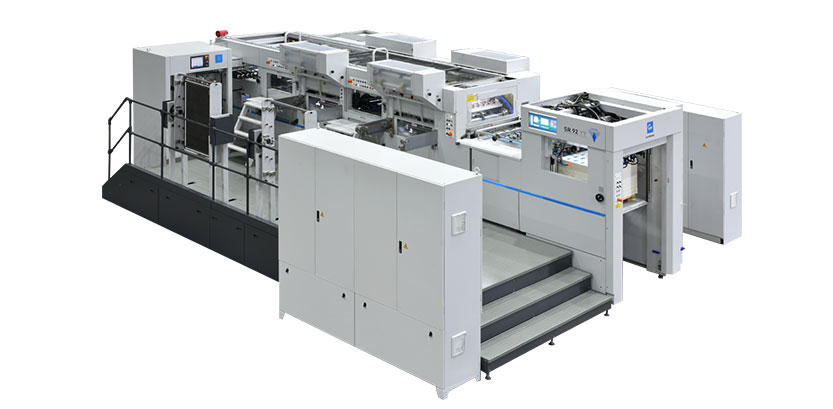
When parameter precision matters—especially for heat‑sensitive substrates or high‑volume production—the engineering of the stamping machine determines how reliably settings translate into results. Modern foil stamping machines from established manufacturers incorporate features that directly support the parameter optimization process: multiple independently controlled heating zones (often 20 or more) with temperature accuracy maintained within ±1°C; stamping pressure adjustable in 0.01mm increments via touchscreen; side and front lay photocells with adjustable sensitivity for consistent sheet positioning; and synchronous longitudinal and transversal foil feeding to reduce waste and shorten setup time. For converters who run a wide variety of substrates—from thin uncoated paper to thick coated board, leather, and plastics—these capabilities transform parameter tuning from guesswork into a repeatable, documented process.
Keep a log, save your settings, stop guessing
Document every successful job. Record substrate type, foil manufacturer and grade, sheet size, temperature by zone, pressure setting, dwell time, and machine speed. Note the condition of the die (new, worn, cleaned) and the ambient temperature in the shop. Over time, this log becomes a reference that eliminates setup guesswork. For facilities using machines with PLC control and touchscreen interface, job profiles can be stored for recall. When the same substrate and foil combination runs again, the operator recalls the saved profile—temperature zones, pressure, speed—and the machine is ready within minutes. The result is not just better foil stamping; it is less waste, faster changeovers, and predictable results across shifts and operators.
→ Request a quote from Guowang Group for the SR920YY Double-Unit Hot Stamping Die Cutting Machine — Share your typical substrates (paper, plastic, leather, wood), maximum sheet size, and monthly production volume. Their technical team can recommend the right configuration and provide pre‑set parameter files for your most common substrates.

 English
 Français
 Español
 Português
 عربي
عربي