
Why does a foil stamping machine need 20 independently controlled heating zones?
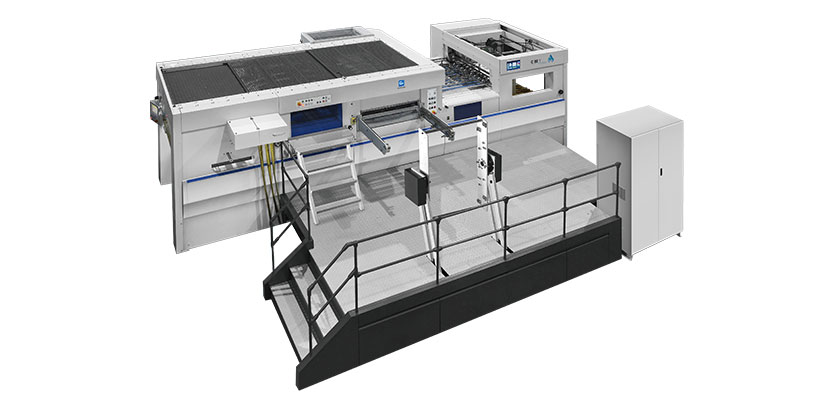
Walk into any packaging plant, and you will see the same tension during setup: operators hovering near the hot stamping unit, waiting for temperatures to stabilise across the platen. Large‑area foil application demands uniform heat distribution. If one corner runs cooler than the rest, you get patchy transfer and scrap sheets. If the press has only two or three heating zones, you adjust the entire bank up or down together—there is no way to fix a local cold spot without overheating the rest of the sheet. A foil stamping machine with a divided heating platen changes that dynamic. Twenty independently controlled zones allow you to set centre zones cooler, corner zones warmer, equalising the actual temperature at the paper surface. Over a long shift of foiling watch boxes or greeting cards, that precision translates directly into fewer start‑up spoils and more good sheets. This guide walks through the real specifications of integrated hot stamping and die‑cutting machines: sheet size ranges, stamping versus die‑cutting speeds, temperature control, pressure adjustment, and maintenance realities.
Sheet size range: what 1060×760mm down to 450×370mm actually means for your job mix
The first specification you will see on any integrated machine is the sheet size range. For this model, the maximum sheet size is 1060×760mm, and the minimum is 450×370mm. That spread from just under half a metre to over a metre on the long side covers most commercial work. A 1060×760mm sheet fits four A4‑size brochure covers, twelve cigarette packet cartons, or a full wine gift box blank. The minimum 450×370mm handles short runs of smaller items like business cards or cosmetic blister cards without forcing you to run a costly large‑format sheet.
| Parameter | Value |
|---|---|
| Max sheet size | 1060×760mm |
| Min sheet size | 450×370mm |
| Max die‑cutting size | 1045×745mm |
| Max stamping area | 1020×740mm |
| Sheet thickness range | 0.1‑2.0mm |
The die‑cutting size maximum is slightly smaller at 1045×745mm, reflecting the physical space taken by the cutting chase and die‑cutting tools. On the foil stamping side, the maximum impression area is 1020×740mm. These differences are typical—the stamping foil and heated platen cannot register right to the very edge of the sheet because the gripper margin and foil feed mechanisms need a few millimetres of clearance. Expect to lose 15‑20mm on each dimension between the stated sheet size and the actual printable/stampable area.
For converters who run a mix of small and large jobs, the wide sheet size range means you do not need two separate machines. You can run a short run of 450×370mm business cards in the morning, then switch to 1060×760mm wine cartons in the afternoon. The changeover time between extreme sizes is about 20‑30 minutes, which is reasonable for a machine of this class.
Speed: 7500 die‑cutting sheets/hour versus 6500 stamping sheets/hour
The machine runs at two different peak speeds depending on which process is active. For die‑cutting only (with the foil unit disengaged), the maximum speed is 7500 sheets per hour. For hot foil stamping (with the heating system active and foil feeding engaged), the maximum speed drops to 6500 sheets per hour.
That 1000‑sheet reduction is not a design flaw—it is physics. During stamping, the platen must dwell long enough for the molten foil coating to bond to the paper. Shorten the dwell time to chase die‑cutting speeds, and you get incomplete transfer, patchy foil, and rejected sheets. The 6500 sheets/hour represents the optimal balance between throughput and quality.
How dwell time affects foil adhesion
Foil transfer requires three elements: heat, pressure, and time. If the press moves too fast, the foil layer does not fully melt into the paper fibres. The result is foil that scratches off or peels at the edges. The machine allows operators to adjust dwell time in 0.01‑second increments through the control panel. For heavy cardstock or textured papers, you may need to increase dwell by 0.02‑0.03 seconds; for thin coated paper, you can reduce it to gain speed.
Twenty heating zones: precision temperature control across the whole sheet
The integrated platform uses 20 independently controlled temperature zones across the stamping area, monitored via a smart HMI interface. Why would you need that many zones? Consider a full‑bleed foil design covering most of a 1060×760mm sheet. The centre of the sheet reaches temperature faster than the corners because of how heat conducts through the steel platen and through the paper stack. With twenty zones, you can set the centre zones a few degrees cooler and the corner zones a few degrees warmer, equalising the actual temperature at the paper surface.
Compensating for heater wear and local anomalies
A dying heater cartridge in zone 8 makes that area cooler. With independent zone control, you raise zone 8’s setpoint by 5‑10°C without touching zones 7 or 9. On a press with only three zones, you would have to raise the entire bank, overheating other areas and potentially scorching the paper. The 20‑zone system also reduces energy consumption: you can turn off zones that are not under the sheet (for example, the outer zones when running a minimum‑size 450×370mm sheet).
In practice, operators set up a temperature profile once for each job type and save it in the machine’s memory. The next time that job repeats, they recall the profile and the machine automatically sets all 20 zones to the saved values. This feature alone reduces setup time by 30‑40% compared to manual adjustment of each zone.
Pressure: 550 tons for stamping, 400 tons for die‑cutting
The machine delivers 550 tons of stamping pressure and die‑cutting pressure up to 400 tons. That is enough for deep embossing on thick board (up to 2mm) and for cutting through multiple layers of carton stock. The die‑cutting pressure adjustment is micro‑adjustable to 0.01mm, which is essential for kiss‑cutting labels without cutting through the liner.
-
Stamping pressure: 550T – suitable for heavy foil coverage, blind embossing, and combination dies
-
Die‑cutting pressure: up to 400T – adjustable in 0.01mm increments
-
Pressure uniformity: across the entire sheet, variation less than ±2%
Die‑cutting pressure adjustment: why 0.01mm matters for kiss cuts and folding cartons
When you run self‑adhesive labels, you want to cut through the face stock but not the release liner. That requires extreme precision. The pressure adjustment mechanism allows micro‑adjustments of 0.01mm. Operators can dial in the exact crushing depth without trial‑and‑error scrapping.
For folding cartons, the same precision ensures clean cuts without crushing the board’s edges. A crushed edge looks unsightly and can cause gluing problems downstream. With 0.01mm resolution, you can set the pressure just high enough to cut through the board but not so high that the cutting rule compresses the material beyond its elastic limit.
The machine uses a hydraulic overload protection system. If pressure exceeds the set limit (due to a double sheet or a foreign object), the system automatically trips, preventing damage to the cutting plate and the die. Reset takes about two minutes.
Sheet feeding and handling system
The integrated unit uses a pneumatic feeding system with a double‑sheet detector. Maximum sheet thickness is 2mm (typical for carton board), and minimum is 0.1mm (thin paper). The feeding speed syncs automatically with the stamping/die‑cutting speed via the main PLC.
Key feeding features:
-
Non‑stop feeding unit: Allows adding paper to the pile while the press runs – critical for long shifts. Without this, you would have to stop the press every 30‑60 minutes to reload.
-
Double‑sheet detector: Uses ultrasonic or optical sensors to detect two sheets feeding together. If a double sheet is detected, the press stops immediately, preventing damage to the die and the platen.
-
Sheet alignment: Front lays and side pulls are adjustable from the control panel. Registration accuracy is ±0.1mm.
For thick board (over 1.5mm), the feeding system includes a separate air blast to separate the sheets, preventing misfeeds.
Foil feeding and waste rewinding
The machine handles up to three foil rolls simultaneously, enabling multi‑colour or multi‑design stamping in one pass. Each foil shaft has independent tension control and a waste rewinding unit. The maximum foil roll diameter is 250mm.
Non‑stop foil feeding is standard: when one roll runs out, a second roll automatically feeds in, and the empty core is ejected. Operators can change finished rolls without stopping the press. The waste rewinding unit pulls the used foil away from the stamping area and winds it into a compact roll for disposal or recycling.
For long runs of the same design, the foil saving system can be programmed to advance the foil only the distance needed for each impression, rather than a full frame length. This can reduce foil consumption by 20‑30% on jobs with small stamping areas.
Maintenance and service realities
The integrated machine uses a centralised lubrication system that automatically greases all main bearings and cams every few hours. That reduces daily maintenance to checking oil levels and cleaning the heating platen.
The smart monitor provides real‑time alerts:
-
When any of the 20 heating zones drifts outside the setpoint ±2°C
-
When pressure calibration is due (every 6 months)
-
When lubrication oil level is low
-
When a heater cartridge has failed (detected by resistance measurement)
Recommended maintenance schedule:
-
Daily: Clean foil dust and paper debris from the stamping platen and die‑cutting area. Inspect air filters on the pneumatic system.
-
Weekly: Check heater cartridge resistance values across all 20 zones. Any zone showing more than 5% deviation from the average should be scheduled for replacement.
-
Monthly: Calibrate the pressure sensors using a load cell. Clean and lubricate the foil feed shafts.
-
Every 6 months: Full inspection of the gearbox and drive belts. Replace wear parts such as gripper pads and foil tension rollers.
A well‑maintained machine typically achieves 95% uptime over a two‑shift operation. The manufacturer provides a 12‑month warranty from delivery, with remote troubleshooting via PLC connection and spare parts warehouses in major regions.
Common problems and how to avoid them
Temperature non‑uniformity
Symptom: Foil transfers well in the centre but poorly at the edges. Cause: One or more heating zones are under‑powered or the temperature controller has drifted. Fix: Run a temperature uniformity test using a contact thermometer. Adjust individual zone setpoints or replace faulty heater cartridges.
Foil tearing
Symptom: Foil web tears during stamping, causing blank areas on the sheet. Cause: Excessive tension on the foil shaft or a damaged foil roll edge. Fix: Reduce tension on the affected shaft. Inspect the foil roll for edge damage before loading.
Double sheets feeding
Symptom: Press stops with a double‑sheet error. Cause: Paper stock has static electricity or the sheets are not properly separated. Fix: Install an ionising bar on the feeder. Increase air blast pressure for thick stock.
Inconsistent die‑cut
Symptom: Some sheets cut cleanly, others are not cut through. Cause: Pressure not uniform across the sheet or worn cutting rule. Fix: Use pressure‑sensitive paper to identify low‑pressure areas. Adjust local pressure screws or replace the cutting die.
Three pre‑shipment checks before you buy
Before accepting delivery of a new integrated hot stamping and die‑cutting machine, run these three tests on a sample unit at the factory (or request a witnessed factory acceptance test):
-
Temperature uniformity test – Set all 20 zones to 120°C. Wait 30 minutes for stabilisation. Use a contact thermometer on the platen surface at 10 positions (corners, edges, centre). All readings should be within ±3°C of the setpoint.
-
Pressure consistency test – Place pressure‑sensitive paper (e.g., Fuji Prescale film) across the entire sheet area. Apply 300T pressure. The colour density should be uniform edge to edge. Any light area indicates low pressure; any dark patch indicates overpressure.
-
Foil feed alignment test – Load three foil rolls. Run the machine at 6500 sheets/hour for 10 minutes. The foil webs should not drift more than 1mm sideways from their starting positions. If drift exceeds 2mm, the foil shaft alignment or tension control needs adjustment.
If the machine passes these three tests, it is likely to run reliably on your production floor.
How this integrated platform fits into a post‑press workflow
After years of watching converters run separate foil stampers and die‑cutters, one equipment manufacturer designed a machine that does both in a single pass. The integrated unit shares a common bed, register system, and delivery stack. For a converter, that means:
-
One machine instead of two on the floor – saves valuable space
-
One operator instead of two – reduces labour cost per shift
-
One setup instead of two registrations – cuts changeover time from 2 hours to 45 minutes
-
One quality check point instead of two – reduces handling and potential damage
The manufacturer GUOWANG Group has built post‑press equipment for over two decades. Their flagship model, the Hot Foil Stamping and Die Cutting Machine (C106DY), is now installed in packaging plants across Asia, Europe, and the Americas. The company provides a 12‑month warranty from delivery, on‑site installation and training, remote troubleshooting via PLC connection, and spare parts warehouses in major regions.
Matching the machine to your job mix
A foil stamping machine that also die‑cuts makes the most sense if your work mix includes both processes on similar sheet sizes. The 1060×760mm format is standard for medium‑to‑large cartons, greeting cards, luxury packaging, folding boxboard, and cigarette packet production.
If you primarily run small sheets (under 500mm), a smaller dedicated machine might save energy and floor space. But for converters already operating separate foil stamping and die‑cutting lines, replacing both with one integrated unit typically pays back within 18‑24 months through labour savings alone. The 20‑zone heating system and 0.01mm pressure adjustment give you capabilities that are not available on entry‑level machines.
【Request a quote from GUOWANG Group】


 English
 Français
 Español
 Português
 عربي
عربي