
7 Questions Before Buying a Die-Cutting Machine
You wouldn't buy a car without a test drive, right? Yet nearly four in ten packaging professionals I've met over the past decade made a press equipment purchasing decision they later regretted—simply because they never asked the right questions upfront. The global Die Cutting Machine market was valued at USD 2.9 billion in 2024 and is projected to hit USD 4.4 billion by 2031, growing at 5.90% CAGR—meaning more buyers are entering the space than ever before, and the margin for error is shrinking by the day.
So what exactly are you trying to solve? Whether you're stamping foil on premium carton packaging, kiss-cutting adhesive labels, or creasing corrugated boxes, the decision comes down to seven uncomfortable questions most people avoid asking until it's too late. Let's get brutally honest.
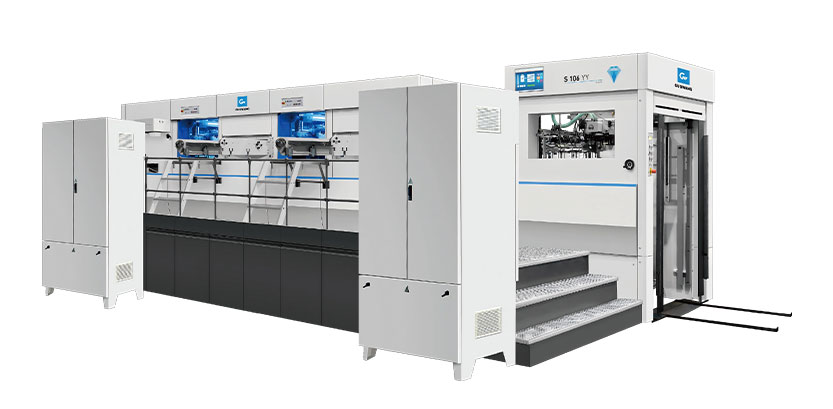
1. What's Your Real Throughput—Not Just the Speed Spec?
Manufacturers love throwing "cycles per hour" at you. Don't bite. I've watched countless owners buy a 7,500-sheets-per-hour flatbed press only to realize their job changeover takes 40 minutes, wiping out any theoretical speed advantage. True productivity is what lands in the finished-goods pile, not what's printed on the brochure.
Here's a litmus test: Ask the supplier to run a simulated production shift using your actual materials—substrates ranging from thin polyester film to 3mm solid bleached board. Watch how long it takes to switch dies, clean the stripping station, and recover from a misfeed. According to industry data, misaligned cutting and registration errors alone can eat up 30 minutes per setup.
A semi-automatic creaser-cutter might suit smaller job shops where flexibility beats raw volume. But for high-volume pharmaceutical packaging or cosmetic cartons, you need a fully automated system with integrated waste removal that runs lights-out.
2. Can Your Floor Space Actually Accommodate the Installation Footprint?
This sounds basic. Yet I've seen a folding-carton plant in Vietnam buy a heavy-duty industrial cutter that measured 11 meters long, only to discover their column spacing was 9.8 meters apart. The machine literally couldn't fit through the door.
Beyond physical dimensions, consider the operating clearance—the space needed for paper pile lifter travel, pre-stacker movement, and service access. A digital web-fed cutter might occupy less floor area but requires clean-room conditions for sensitive sensors. A rotary cutting station with foil unwinders needs longitudinal space for foil rolls and waste rewinds.
Before you sign anything, mark the actual machine footprint plus a 1.5-meter safety perimeter on your factory floor with painter's tape. Live with that layout for a week. You'll notice things your CAD drawing never showed—like where the forklift turns.
3. What Happens When the Tension System Stutters?
You haven't felt real panic until you watch a $5,000 roll of metallized foil laminate delaminate because the web guiding system hiccupped. Multi-layered materials—paperboard, adhesive film, foil-faced stock—each behave differently under cutting pressure.
The mechanics behind consistent automatic flatbed cutting involve interplay between feeding traction, cutting impact shock absorption, and stripping ejection force. Push one parameter outside your material's tolerance window, and you'll see misaligned hot foil transfer or torn labels. Established post-press equipment specialists typically publish material compatibility charts for their stamping machines, covering substrate categories from lightweight tissue (30–80 gsm) to heavyweight rigid boards (up to 2,000 gsm with appropriate modification).
Your pre-purchase checklist must include: "Have we test-run our complete material portfolio—including future materials we plan to add—on this specific model?"
4. Who's Training Your Operators, and How Deep Does That Training Go?
The machine doesn't create value. The person running it does. I know a packaging plant that bought a $380,000 embossing system and never got proper training. Six months later, they were still running at 62% of rated capacity because operators kept guessing at temperature calibration and pressure settings.
Ask point-blank: How many hours of hands-on training are included? Is it at your facility or theirs? Will the technician stay through the first full production run on your toughest job? Guowang provides free on-site training for domestic customers (1–3 days covering safety, operation, and routine maintenance) plus English video guidance for international buyers, extending through a full-year standard warranty.
Here's the question nobody asks: "What's your policy when an operator calls at 2 AM with a servo alarm code?" If the answer is anything other than a clear protocol, keep shopping. Look for machinery manufacturers that structure technical support as remote diagnosis via video/photo, spare parts dispatch, and on-site engineer response within 48 hours for domestic markets or 5 days for overseas.
5. How Will You Handle Maintenance Three Years from Now?
The initial price tag is a liar. Three years in, your cumulative cost comprises the original purchase plus spare parts, technician call-outs, and installation downtime.
Do a total cost of ownership projection. For a mid-volume console cutter, assume annual maintenance runs 5–8% of purchase price. For a high-speed automatic blanking system, that climbs to 10–12%.
Verify that wear parts like cutting plates, heating elements, and pneumatic cylinders are off-the-shelf components—not proprietary nightmares. Guowang specifies key subsystems from tier-one global suppliers: Yaskawa/Mitsubishi servo systems from Japan, Siemens PLC controls from Germany, and SMC pneumatic components. This matters enormously because it means replacement parts are standard industrial catalog items, not orphaned custom builds.
Then ask about the supplier's spare parts inventory. Can they ship a replacement heating roller within 72 hours? Do they stock replacement dies for your most common job formats?
6. Are You Overbuying Features You'll Never Use—Or Underbuying the Ones You Actually Need?
I see this constantly: A label converter buys a rotary cutter with 12 tooling stations, but they only ever use three. A packaging startup buys a basic manual press, then three months later lands a contract that demands continuous hot stamping and embossing—neither of which their machine can do.
You need Goldilocks equipment: not too much, not too little, exactly right for your production mix.
Compare manual vs semi-automatic vs fully automatic. Manual lever-actuated presses cost the least and work fine for prototyping and runs under 5,000 sheets, but they're labor-intensive. Automated versions, while significantly costlier upfront, deliver the cutting precision and sustained throughput that justify the investment for large-scale operations.
Digital web-fed cutters offer incredible flexibility—no physical dies needed—but come with steep software learning curves and slower per-part speeds. The decision matrix isn't about "best" technology. It's about aligning automated die cutting capabilities with your actual job mix.
Then check how the precision guidance system holds registration. Look for press equipment rated at ±0.1mm or tighter. Some advanced systems achieve repeat positioning accuracy of ±0.03mm and handle ultra-fine cutting down to 0.2mm.
7. What Are You Really Trying to Build—and What Happens When That Changes?
This is the question no one asks because it feels too abstract. But it's the only one that matters long-term.
Maybe today you're cutting simple paperboard cartons. But next year, that big client wants cold foil transfer, holographic effects, and raised embossing with matte/gloss UV spot coating. If your equipment can't integrate those processes, you're either outsourcing (destroying margins) or buying a new machine (killing ROI).
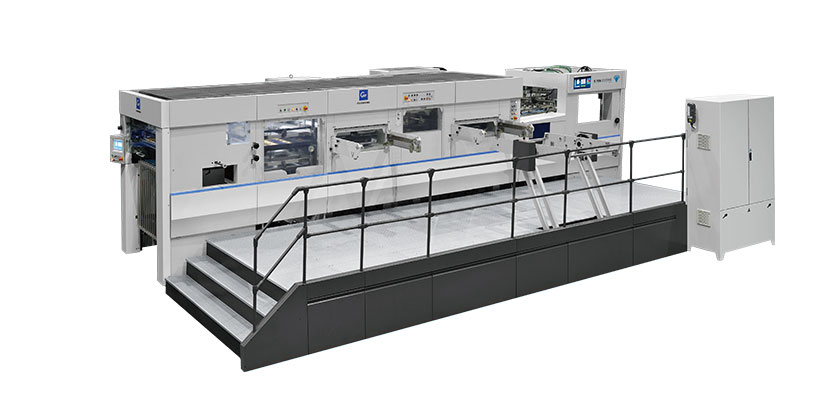
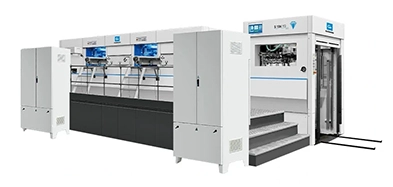
Future-proof your purchase by choosing equipment that can stack finishing operations in one pass. Modern flatbed hot foil stamping machinery from serious manufacturers integrates die-cutting with waste stripping, embossing, and multi-station foil application in a continuous workflow.
The real heart of this decision comes down to one capability: customized machine configuration. This isn't a luxury—it's survival.
How a specialized post-press manufacturer tackles custom requirements:
In the industrial packaging finishing space, one-size-fits-all rarely works. A Chinese post-press equipment manufacturer like Guowang (established 1993, 120,000 m² facility, 80+ R&D engineers, CE/TUV certified) structures Die Cutting Machine customization around three core axes.
First axis—material adaptation. Standard cutting devices handle paper and thin cardboard. But if you're processing 4mm corrugated board or heat-sensitive laminated film, the pressure curve, heating profile, and feeding tension all need recalibration. Leading manufacturers offer tailored pressure ranges—from light-touch kiss-cutting for adhesive labels to high-tonnage crushing for thick greyboard—with a 20-30% safety buffer above your current thickest substrate.
Second axis—operational integration. A label printer needs a rotary foil stamping unit with high-speed web guiding. A pharmaceutical folding-carton line needs a flatbed cutter with integrated waste stripping and a blank separation system that neatly stacks finished products. These aren't spec sheet variations; they're fundamentally different finishing cells.
Third axis—certified quality infrastructure. Equipment that will run 24/7 must pass rigorous validation. Quality control should include material traceability (steel and electronic components from Japanese and German suppliers), process verification (72-hour continuous load testing on each machine prior to shipment), and final calibration—including laser measurement to ±0.01mm tolerances.
The companies that survive these seven questions are the ones that realize they're not just buying a machine. They're buying a precision manufacturing system that includes routine service response protocols, operator training that actually sticks, and modular post-print processing capability that can grow with their business.


 English
 Français
 Español
 Português
 عربي
عربي