
Paper Sheeter for High-Speed Sheet Cutting
A converting line running at full speed suddenly jolts to a halt. The operator sighs, pulling a stack of sheets with rough, dusty edges from the delivery pile. The knife is dull again, after only half a shift. This scenario, familiar in many mills, highlights a fundamental tension in paper converting: the pursuit of raw speed often collides with the need for cut quality and uptime. When you are pushing past 300 meters per minute, every micron of blade alignment and every millisecond of tension response matters. Getting it wrong doesn't just waste paper—it erodes margins on the very jobs you took to keep the line busy.
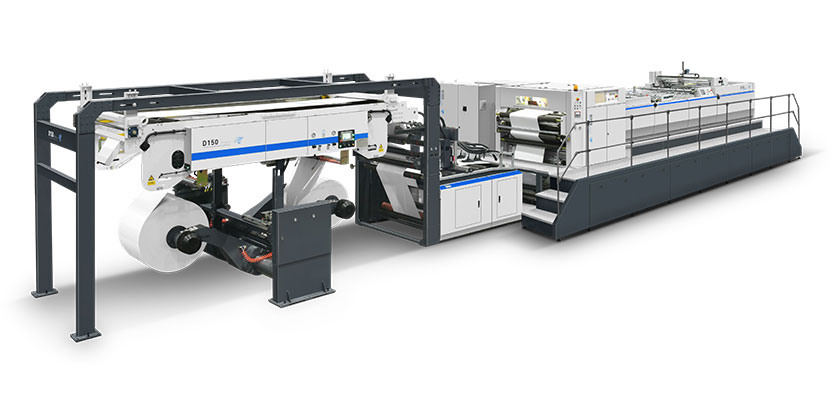
So how do you achieve genuinely productive high-speed sheeting, without trading off reliability or edge finish? It is rarely about a single machine specification. Instead, it requires a systemic look at the sheeting process, from the way the web enters the backstand to how the finished stack transfers to the pallet. Here are the design and operational factors that separate lines which consistently hit their targets from those that deliver unpleasant surprises.
The Knife Geometry You Don’t See—and Why It Governs Speed
Many buyers focus on the maximum rated speed of a sheeter. But "rated speed" is only a headline figure. The real constraint often lies in the cutting interface itself. Ask any maintenance veteran and they’ll tell you: the angle at which the top and bottom knives meet, the penetration depth, and the shear angle are not abstract engineering details. They determine how many sheets you can cut between sharpenings, how loud the line runs, and whether you see dust buildup that forces extra cleaning cycles.
Take the difference between a crush-cut and a shear-cut configuration. In heavy board or coated grades, a well-maintained shear-cut rotary drum can reduce dust generation by over 40% compared to a crush-cut setup, according to data shared by a Nordic paperboard mill during a TAPPI conference. That directly translates to longer uninterrupted runs. But if the shear angle is set too aggressively, you introduce micro-cracks at the edge of the sheet—barely visible at line speed, yet enough to jam high-speed packaging lines downstream.
The lesson: When evaluating high-speed sheeting equipment, look past the motor power. Request detail on knife metallurgy (carbide vs. tool steel), the recommended knife overlap tolerance under thermal expansion, and the ease of micro-adjustment while the line is running. A design that offers quick, toolless knife gap tuning can save up to 20 minutes per adjustment, according to field reports from converting supervisors.
Tension Control: The Invisible Hand That Makes or Breaks Sheet Length Accuracy
You can install the sharpest knives in the industry, but if the web flutters entering the cutting section, your sheet length precision collapses. High-speed sheeting is fundamentally a tension isolation problem. The tension needed to pull the roll smoothly off the unwind stand is often not the tension optimal for presenting a flat, stable web to the cutting drum.
Modern high-performance lines solve this with a draw control section placed immediately before the knife. A servo-driven infeed roll, paired with a precision dancer or load cell feedback loop, decouples the unwind zone from the cutting zone. This allows the line to absorb sudden tugging from an out-of-round parent roll without propagating the disturbance to the sheet length. A European coated paper producer found that upgrading their draw control resolution from analog to direct-drive servo with 4-micron backlash levels improved their sheet length Cpk (process capability index) from 1.1 to over 1.6, virtually eliminating out-of-spec sheets.
For operators, the critical practice is not to overtighten the web "just to be safe." Excessive tension causes necking (width reduction) and introduces a built-in length error that changes as the roll diameter decreases. The best results come from running at the lowest stable tension for that grade and basis weight—a parameter worth mapping for each stock. A practical tip: document tension settings not just by grade name, but by the specific moisture content and caliper range of the incoming rolls. Seasonal variations matter.
At this point, you might be examining your existing line and identifying the exact bottlenecks described above. In many converting plants, the assessment reveals that continuous improvements to an outdated knife section or drive system hit diminishing returns. For those mapping out a forward-looking sheeting strategy, it is worth exploring integrated sheeting solutions designed from the ground up for high-speed stability.
Automation That Goes Beyond Button-Pushing
Walk around a sheeter at full speed and you'll notice skilled operators doing the same things repeatedly: jogging the web, checking a few sheets with a ruler, tweaking the overlap, writing down measurement values. Their expertise is invaluable, but it’s consumed by monitoring tasks that a closed-loop system can perform faster. The next tier of high-speed sheeting efficiency comes from automating not just the mechanical cut, but the decision-making.
Automatic sheet-length correction does this by continuously measuring delivered sheets and correcting the relative speed between the knife drum and the infeed. Some systems even compensate for the gradual elongation of the paper web due to moisture absorption during a run. A packaging converter in the Midwest USA reported that adding automatic knife positioning with pre-programmed job recipes slashed their order changeover time from 18 minutes to under 4. This wasn’t achieved by rushing the crew, but by removing manual gauge adjustments and trial cuts.
What should you look for in the control architecture? A system that logs cut quality metrics per order, not just per shift. This creates a traceable record for ISO 9001 environments and helps pinpoint whether an edge-quality complaint originated from a specific roll or a specific knife maintenance interval. The ability to remotely access fault diagnostics is another practical check. It transforms a 2 a.m. alarm from a crisis into a guided troubleshooting session, often resolved by a senior technician from home rather than a site visit.
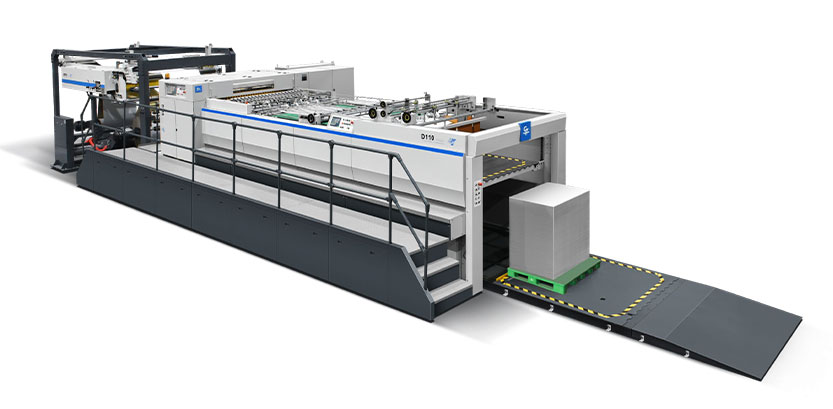
Maintenance Realities: Planning Your Knife Changes Before They Plan Your Downtime
No discussion of high-speed cutting can avoid the physical truth: the knife is a wear part. How you manage that wear distinguishes reactive plants from world-class operations. Rather than waiting for edge dust to appear, leading mills now schedule knife changes based on the linear meters cut on specific grades—a figure they refine over time using inspection data.
One effective approach is to maintain a simple logbook or digital twin of the knife drum: record the date, the total running meters, and a one-line observation of the cut quality at the previous change. After six months, patterns emerge. You might find that a particular grade of clay-coated board degrades the knife edge 30% faster than standard SBS. Armed with that knowledge, you shorten the change interval for those jobs and virtually eliminate unscheduled stoppages.
Common oversight: neglecting the anvil or bottom knife condition when the top knife is changed. A worn anvil causes the new top knife to dull asymmetrically, replicating the problem within hours. The best practice is to inspect and, if necessary, lightly resurface or replace the anvil at every other knife change—a small cost compared to the scrap generated by a bad cut. Learn more about modular designs that simplify this paired maintenance, allowing a single technician to swap both elements in under 15 minutes.
The Truce Between Speed and Quality
The historical narrative in paper converting pitted speed against precision. You could have one, but not both. Today, that separation is being erased by digital motion control, smarter process layouts, and a deeper understanding of web mechanics. The fastest sheeters are no longer the ones that simply spin a drum at maximum RPM; they are the ones that maintain a perfect, repeatable cut quality through the entire acceleration, steady run, and deceleration of every roll. That requires advanced electronic camming that matches knife velocity to web speed instantaneously, eliminating the "long sheet" effect during ramp phases.
This shift has a direct financial impact. In sheeting operations, the metric that truly matters to the bottom line is not meters per minute, but salable tons per shift. Every percentage point gained by reducing broke, rewinding, and re-sheeting falls directly to the contribution margin. Several independent consulting studies, including benchmarks from Fisher International, indicate that moving from a line efficiency of 82% to 91% on a single medium-size sheeter can yield an additional 2,400 salable metric tons per year—representing substantial incremental revenue without adding headcount.
If your team is now discussing how to close that gap, and what a genuinely synchronized sheeting line looks like in practice, you may want to view precision sheeting options that bring together the servo-driven draw control, automatic knife positioning, and recipe-based changeover described above. Guowang has developed their sheeting technology with an emphasis on exactly these integration points, based on feedback from converters running coated boards, label stock, and lightweight packaging grades.
A Smarter Approach to Sheeting
An old converting foreman once said, "A sheeter is not a machine you buy; it's a process you commit to." He wasn't exaggerating. The equipment that simply lasts the longest and performs the most consistently is almost always the one that was configured with an honest assessment of the product mix, not just the highest headline speed. By respecting the interplay of knife mechanics, tension isolation, and operator-level automation, you build a sheeting cell that delivers predictable output, roll after roll, without drama.
The next step is not to chase specifications on a brochure, but to audit your current line’s actual performance at the cut point—run an SPC study on sheet length, measure knife life in real terms, and check the scrap rate origin data. Once those numbers are on the table, the conversation shifts from "we need a faster machine" to "we need a more intelligent process." That’s the conversation worth having.

 English
 Français
 Español
 Português
 عربي
عربي