
How Does a Hot Foil Stamping Machine Work – Basic Working Principle
A foil stamping machine is different from a printing press. Printing lays down ink. Embossing raises the paper without adding colour. Hot foil stamping transfers a metallic or pigmented layer from a carrier film onto the substrate using heat, pressure, and a precise moment of contact called dwell time.
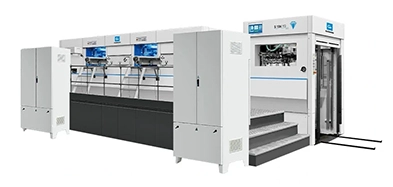
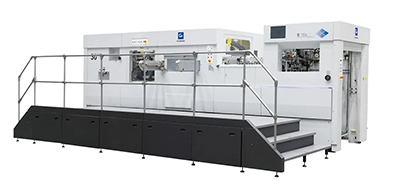
This article explains the four essential components of any hot foil stamper, the step‑by‑step process inside a double‑unit machine, and how large‑format presses hold registration between stamping and die‑cutting. The performance figures cited here are based on typical specifications for S106DYQ Double-Unit Automatic Heavy-Pressing Hot Stamping & Waste-Removing Die-Cutting Machine— handling sheet sizes up to 1060×760mm, running at 5,000‑5,500 sheets per hour, and delivering ±0.075mm stamping accuracy.
The Four Subsystems Behind the Stamp
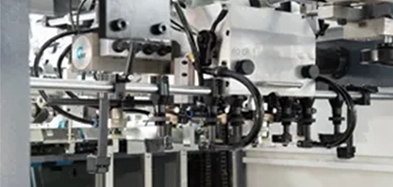
Every hot foil stamping machine has four basic subsystems. The heated die is etched with the design and heated electrically. On the S106DYQ, the platen has 20 independently controlled heating zones (30‑200°C). Foil is pulled between die and substrate by the unwind/take‑up system; the S106DYQ Double-Unit Automatic Heavy-Pressing Hot Stamping & Waste-Removing Die-Cutting Machine Double-Unit Automatic Heavy-Pressing Hot Stamping & Waste-Removing Die-Cutting Machineuses longitudinal and transverse foil feed with up to six Yaskawa servo motors to reduce waste. The pressing mechanism delivers up to 550 tons of stamping pressure, with die‑cutting pressure adjustable in 0.01mm increments. The feeding table uses a non‑stop feeder with a 1600mm pile height and a precision gripper bar for accurate registration.
.jpg)
The Inner Workings of a Double‑Unit Hot Foil Press – Step by Step
A single sheet goes through the following sequence on the S106DYQ. The machine runs at 5000‑5500 sheets per hour.
-
Sheet feeding – Four suction cups lift the top sheet from a pile up to 1600mm high. Four transfer cups move it onto the feed table. A preload device stages the next stack while the press draws from the active pile.
-
Registration – The sheet is aligned by side guides and front lays to the gripper bar. Registration accuracy between the first and second units is ±0.075mm.
-
First unit – hot foil stamping – The heated die, at the set temperature (stored in the job recipe), presses the foil against the sheet. The die is held at that temperature by the 20‑zone PID system.
-
Foil transfer – Heat activates the adhesive on the foil. The die lifts, and the foil carrier is rewound. The metallic layer remains bonded to the sheet.
-
Second unit – die‑cutting and waste stripping – The same gripper bar holds the sheet. A cutting die trims the shape. Stripping pins push internal cut‑outs onto a conveyor belt. The finished product continues to the delivery stacker.
-
Delivery – The non‑stop delivery system allows stack removal without stopping the press. The maximum delivery pile height is 1350mm.
The entire cycle repeats at high speed. The same gripper edge holds the sheet through both stations, so the foil mark aligns exactly with the die‑cut window to within ±0.075mm.
The Role of Dwell Time – Why It Matters
Dwell time is how long the heated die stays in contact with the foil and substrate. It is controlled by the machine’s PLC and is independent of press speed on the S106DYQ Double-Unit Automatic Heavy-Pressing Hot Stamping & Waste-Removing Die-Cutting Machine.
-
Short dwell time – Insufficient heat reaches the adhesive. The foil does not bond properly and may flake off after handling.
-
Long dwell time – Excess heat can scorch the paper or melt the foil carrier, causing burn‑through or sticking to the die.
-
Optimal dwell – The operator stores the correct dwell setting for each job. For thick board, dwell is longer; for thin paper, shorter.
| Variable | Control Method | S106DYQ Specification |
|---|---|---|
| Temperature | 20 independent zones, PID control | 30‑200°C, each zone independently adjustable |
| Stamping pressure | Mechanical toggle linkage | Up to 550 tons |
| Die‑cutting pressure | Servo‑driven, 0.01mm increments | Up to 400 tons |
| Registration accuracy | Same gripper bar across both units | ±0.075mm |
| Speed (die‑cutting) | Variable | 5000‑5500 sheets/hour |
| Sheet size | Max | 1060×760mm |
| Pile height (feeder) | Max | 1600mm |
Hot Foil vs. Cold Foil – A Quick Clarification
Cold foil stamping uses UV adhesive applied by a printing unit. The foil is pressed onto the wet adhesive, and UV lamps cure the bond. It is fast and works inline with printing presses, but the result is flat and lacks the raised, reflective quality of hot foil.
Hot foil stamping uses a heated die to activate a heat‑sensitive adhesive pre‑coated on the foil. The die presses the foil into the paper, creating a bond that is both strong and dimensional. The metallic layer sits slightly above the surface, reflecting light from a single angle — the look of premium packaging.
The Guowang S106DYQ Double-Unit Automatic Heavy-Pressing Hot Stamping & Waste-Removing Die-Cutting Machine is a hot foil stamping machine. It also performs die‑cutting and waste stripping in the same pass, which cold foil systems cannot do. For a converter producing wine boxes, cosmetic cartons, or greeting cards, hot foil on a dedicated flatbed press remains the standard for high‑end results.
Foil Stamping Operations – Common Issues & Questions
Does the machine require pre‑heating before each job?
Yes. The 20 heating zones must reach the set temperature before stamping. Pre‑heating from a cold start takes time, but the machine stores temperature profiles for repeat jobs. The operator recalls the profile, and the zones warm up automatically.
Can I use the same die for different foil colours?
Yes. The die is independent of colour. You change the foil roll, not the die. However, different foils may require different temperature and dwell settings. The S106DYQ stores these parameters per job.
What happens if the foil runs out mid‑cycle?
The machine monitors foil usage. When the remaining foil falls below a threshold, it triggers an alarm and stops after completing the current sheet. The operator changes the roll and restarts; no incomplete stamp occurs.
Can a double‑unit machine stamp on both sides of the sheet in one pass?
Not without a turnover device. The S106DYQ stamps and die‑cuts on the same side. For two‑sided stamping, a second pass is required.
The Importance of Knowing the Working Principle for Daily Operation
Understanding the four elements — heat, pressure, dwell time, and foil release — turns troubleshooting from guesswork into diagnosis. Foil does not stick typically means temperature is too low, dwell time too short, or pressure insufficient. Foil smears or burns suggests temperature too high, dwell time too long, or pressure excessive. And if the foil does not release from the carrier, the die may be dirty or the foil batch defective.
A modern foil stamping machine displays actual vs. setpoint temperature for each heating zone on a touch screen. If a corner is cold, the operator raises that zone’s setpoint without affecting the rest of the sheet. The press also stores job recipes, so once a wine box job is dialed in, the settings recall instantly.
For a packaging plant running 50,000 sheets per shift, cutting troubleshooting time by 10 minutes per day adds 40 hours of production per year. Guowang offers an interactive machine animation video for operator training — contact them to request access.
【Request a quote from Guowang Group】
Contact Guowang with your sheet size, stamping area, and whether you need dual‑unit stamping and die‑cutting to receive a basic working principle video and a machine configuration recommendation.


 English
 Français
 Español
 Português
 عربي
عربي