
Don’t Buy a Foil Stamper Before Reading
You’ve seen the dazzling metallic finishes on premium labels, luxury cartons, and high-end flexible packaging. So you decide it’s time to bring foil stamping in-house. But here’s what most production managers discover too late: choosing the wrong foil application method can double your waste, stall your lines, and lock you into obsolete technology within 18 months.

Before you evaluate any equipment, let’s walk through the four most expensive mistakes buyers make—and how to avoid them while building a scalable finishing workflow.
Mistake 1: Ignoring the Substrate–Foil Compatibility Threshold
Not all foils behave the same way on different materials. A foil that works perfectly on coated paper may delaminate or skip on uncoated stocks, films, or textured substrates. Many first-time buyers assume “higher pressure equals better transfer.” In reality, excessive pressure distorts flexible materials and causes smudging, while insufficient pressure leads to incomplete coverage.
What to check first:
Request foil test runs on your actual production substrates—including waste allowance for setup. Evaluate adhesion using tape tests and rub resistance. If a supplier hesitates to provide substrate-specific data, consider that a red flag.
The most reliable systems allow independent temperature, pressure, and dwell time adjustments. For converters running both paper and film, modular hot stamping solutions that support quick changeovers become critical.
Mistake 2: Underestimating Registration Precision Across Long Runs
Hot foil stamping isn’t just about “sticking metal onto board.” On multi-station lines—especially those combining flexo, lamination, and foiling—cumulative registration errors destroy jobs. Standard mechanical indexing may drift after 5,000 impressions, causing foil to land outside kiss-cut windows or overlap critical typography.
Real-world impact:
One label converter reported 14% material waste on a 50,000-run job because their foil unit couldn’t maintain ±0.5mm registration beyond 30 minutes of continuous running. That waste alone exceeded the equipment’s “savings” within three months.
Look for systems with servo-driven foil draw and electronic registration control. Better yet, machines that integrate print registration and foil indexing through a unified HMI reduce operator guesswork. For high-speed lines, a dedicated rotary foil stamping system with closed-loop tension control ensures consistent laydown even on elastic substrates like shrink sleeves.
Mistake 3: Overlooking Modularity and Future Upgrade Paths
Here’s a hidden cost trap: buying a foil unit that’s welded to a single configuration. Maybe today you only need intermittent foil stamping on folding cartons. But next year, a key client requests full-surface foil on squeezable tubes—or holographic patterns on security labels.
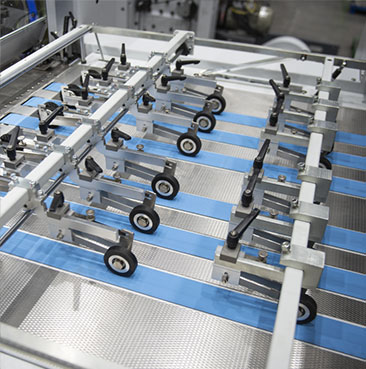
Rigid systems force you to either decline profitable work or replace the entire station. Smart buyers prioritize platforms that accept:
-
Interchangeable foil unwind/rewind shafts
-
Cold foil conversion kits
-
Rotary die-cutting integration for register-critical applications
A modular hot stamping solution for webs not only protects against obsolescence but also reduces spare parts inventory. One EU-based flexible packaging house extended its press’s usable life by 7 years simply by upgrading foil modules instead of buying a new line.
Mistake 4: Forgetting Total Cost of Ownership Beyond the Sticker Price
Low-entry foil equipment often carries hidden expenses: high foil breakage rates, long changeover times, and expensive proprietary foil rolls. One Asian converter compared two similar-priced units—the cheaper model required 18% more foil due to poor tension control, plus 90 minutes of daily cleaning versus 15 minutes on the alternative.
Calculate these three TCO components:
-
Foil waste percentage
-
Average setup time per job
-
Annual maintenance parts cost
Ask suppliers for documented TCO worksheets. If they can’t provide one, test their claims by running an 8-hour production simulation with your own material.
How to Make a Future-Proof Decision
Instead of searching for a generic “foil stamping machine”, reframe your requirement around your actual production bottlenecks. Ask:
-
Do we run short or long runs?
-
What’s our maximum web width and line speed?
-
Will we add cold foil for fine details or holographic effects?
For converters handling labels, flexible packaging, or multi-layer composites, the most cost-effective path is often an integrated but expandable platform. You want a system that handles today’s predictable volumes while leaving room for tomorrow’s unexpected applications.
If you’re targeting waste below 3% and changeovers under 10 minutes, consider examining Guowang’s modular hot stamping solution for webs—designed with servo-driven foil draw, tool-free roll locks, and retrofit compatibility with most CI and stack presses.
Final Checklist Before Signing Any Quote
-
Tested foil adhesion on 3+ of your actual substrates
-
Registration stability verified over 1+ hour continuous run
-
Modular upgrade path in writing
-
TCO calculation covering foil waste + downtime + parts
The goal isn’t to buy another machine. It’s to build a foil finishing cell that grows with your most profitable accounts. Skip the generic specs. Focus on the four mistakes above—and you’ll avoid the regret that follows rushed decisions.
Note: The images in this article are for reference only.


 English
 Français
 Español
 Português
 عربي
عربي